
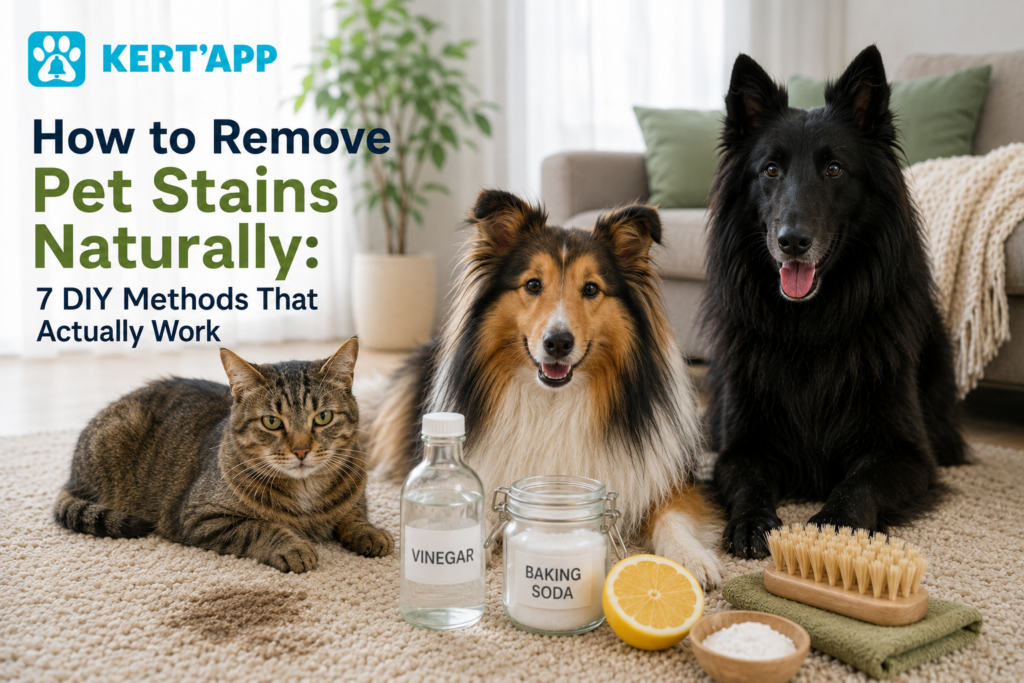
Blot fresh urine immediately. For most fresh-to-moderate stains use a 1:1 white vinegar + water spray, then cover with baking soda and let it dry overnight. For old or recurring stains use a true enzymatic cleaner (or a strong hydrogen peroxide + dish soap mix on light carpets). Enzymes are the only household approach that reliably breaks down the uric acid crystals responsible for the permanent smell. Never use hot water, steam, ammonia, or bleach.
Pet urine is one of the hardest household stains to eliminate completely. It is not just water. It contains urea, creatinine, uric acid, salts, and bacteria. When the liquid dries, the uric acid forms microscopic crystals that embed deep in carpet fibers, padding, and sometimes the subfloor. Ordinary cleaners and even many “pet” sprays only mask the ammonia smell temporarily. The crystals remain, and the next time humidity rises or a pet walks over the spot, the odor returns — which is exactly why dogs and cats keep returning to the same place.
Natural methods work when they either neutralize the alkaline ammonia compounds (vinegar and baking soda), oxidize the organic pigments (hydrogen peroxide), or biologically digest the proteins and uric acid (enzymes). Below you will find seven complete, tested methods with exact ratios, dwell times, surface notes, and the chemistry behind why each one succeeds or fails. These are the same approaches used by professional cleaners and recommended across high-ranking DIY guides.
If you are specifically dealing with dog urine on carpet, you may also find our dedicated guide useful: How to Remove Dog Urine Stains From Carpet: 5 Proven Methods.
Why Pet Stains Are So Stubborn
Fresh urine is relatively easy because the compounds are still liquid. Once it dries, the uric acid crystallizes. Those crystals do not dissolve in ordinary soap and water. Heat (steam cleaners or hot water) actually sets the stain permanently. Ammonia-based cleaners smell similar to urine and can attract the pet back. Bleach can create toxic gases when mixed with ammonia residues and damages many fibers.
The only reliable ways to permanently remove the odor are:
- Neutralize the pH and absorb residual compounds (vinegar + baking soda)
- Oxidize the organic material (3% hydrogen peroxide)
- Digest the proteins and uric acid at a molecular level (enzymes)
That is why the methods below are ordered from fastest for fresh accidents to most thorough for old stains.
The Natural Ingredients Explained
- White vinegar (5% acetic acid) – Lowers pH, neutralizes alkaline ammonia, kills odor-causing bacteria. Excellent on fresh stains.
- Baking soda (sodium bicarbonate) – Alkaline, absorbs moisture and odor molecules, provides gentle abrasion. Best used after vinegar while the area is still damp.
- 3% hydrogen peroxide – Oxidizer that breaks down organic pigments and some uric acid compounds. Very effective on light-colored carpets and set-in stains. Always patch-test.
- Enzymes (protease, urease, etc.) – Biological catalysts that literally digest urine proteins and uric acid crystals into water and carbon dioxide. The gold standard for old or recurring stains.
- Mild dish soap – Surfactant that helps lift oils and proteins from fibers.
- Lemon juice (citric acid) – Mild acid that neutralizes odor and offers light antimicrobial action. Useful on hard surfaces.
Always test any solution on a hidden area first. Keep pets and children away until the area is completely dry.
7 Natural Methods to Remove Pet Stains
1. Enzymatic Cleaner – Best Overall for Old, Set-In, or Recurring Stains
Enzymatic cleaners are the only method that truly digests the uric acid crystals rather than just neutralizing surface odor. They are especially important for cat urine and any stain older than a day or two.
What you need:
A quality pet enzymatic cleaner (look for ones that list protease or urease enzymes). Plant-based options work well and are widely available.
Steps:
- Blot up as much liquid as possible with paper towels or a clean cloth. Press firmly – never rub.
- Saturate the entire affected area, including several inches beyond the visible stain (urine spreads under the surface).
- Let it dwell for the full time listed on the bottle (usually 15 minutes to several hours). For very old stains, cover with a damp towel and leave overnight.
- Blot or extract with a wet/dry vacuum.
- Allow the area to air-dry completely. Use fans if needed.
- Repeat if any odor remains after 24 hours.
Why it works: Enzymes break the organic molecules into simpler compounds that can be rinsed away. Regular detergents cannot do this.
2. Baking Soda & White Vinegar – Best All-Purpose Homemade Method
This is the classic cheap, effective combination that answers most “best homemade pet stain remover” and “baking soda for pet stains” searches.
What you need:
White vinegar, baking soda, cool water, spray bottle, soft brush (optional), vacuum.
Steps:
- Blot the stain thoroughly until almost dry.
- Mix equal parts white vinegar and cool water in a spray bottle.
- Spray generously until the area is saturated. Let sit 10–15 minutes.
- Blot again.
- While the area is still damp, sprinkle a thick layer of baking soda over the entire spot.
- Optional: gently work it into the fibers with a soft brush.
- Let it dry completely (overnight is ideal).
- Vacuum thoroughly.
Pro tip: Never mix vinegar and baking soda in the same bottle. Apply them separately so the fizzing reaction happens on the stain itself.
This method is excellent for carpet, rugs, and most fabrics. It is also one of the cheapest options for large areas.
3. White Vinegar Spray – Fastest for Fresh Accidents
Ideal when you catch the accident within minutes or a few hours.
What you need:
White vinegar, cool water, spray bottle.
Steps:
- Blot immediately with paper towels until almost dry.
- Mix 1:1 white vinegar and cool water.
- Spray liberally over the entire area the urine reached.
- Let sit 5–10 minutes.
- Blot thoroughly.
- Follow with a light baking soda sprinkle if any odor remains, then vacuum when dry.
4. Hydrogen Peroxide Method – Best for Light-Colored Carpet and Set-In Stains
This directly answers “does hydrogen peroxide get rid of pet stains?” and “hydrogen peroxide for pet stains.” Yes – when used correctly at 3% concentration.
What you need:
3% hydrogen peroxide (standard drugstore strength), mild dish soap, optional baking soda, spray bottle or bowl.
Steps:
- Blot the stain.
- Mix ½ cup 3% hydrogen peroxide + 1 teaspoon clear dish soap. For a paste version, add 1 tablespoon baking soda.
- Apply to the stain. Let sit 10–15 minutes (do not exceed 20–30 minutes on the first try).
- Blot or gently work with a soft brush.
- Rinse lightly with cool water and blot dry.
- Vacuum once fully dry.
Important safety notes:
Always patch-test first – hydrogen peroxide can lighten some dyes. Never use higher than 3%. Keep pets away until completely dry and rinsed. Works best on light or white carpets. For dark carpets, prefer enzymes or vinegar + baking soda.
Hydrogen peroxide oxidizes the organic pigments and helps break down some of the odor compounds. It is particularly useful when you see yellowing that vinegar alone did not remove.
5. Dish Soap & Water – Gentlest for Upholstery, Clothing, and Delicate Fabrics
What you need:
Clear, fragrance-free dish soap, cool water, clean white cloths.
Steps:
- Blot excess liquid.
- Mix a few drops of dish soap in cool water.
- Dampen a clean cloth with the solution and gently blot (do not oversaturate upholstery).
- Rinse the cloth with clean water and blot again to remove soap residue.
- Press dry with towels.
- Follow with a light vinegar spray or baking soda if odor remains.
6. Lemon Juice & Salt (or Baking Soda) Paste – Best for Dried Stains on Hard Surfaces
Good for hardwood, tile, laminate, and dried spots that need mild abrasion.
What you need:
Fresh lemon juice, salt or baking soda.
Steps:
- Make a paste of lemon juice and salt (or baking soda).
- Apply to the dried stain and let sit 10–15 minutes.
- Gently scrub with a soft cloth or brush.
- Wipe clean with a damp cloth and dry thoroughly.
- On wood, follow with a wood-safe polish if needed.
Caution: Avoid prolonged contact on unfinished wood or natural stone. Citric acid can etch some surfaces.
7. Enzyme + Pet-Safe Essential Oil Finish – Best for Lingering Odor After Main Cleaning
After the main treatment has dried, this final step helps eliminate any residual smell and leaves a light, pet-safe scent.
What you need:
Enzyme cleaner residue or a light mist of enzyme cleaner + 5–10 drops of pet-safe essential oil (lavender, cedarwood, or orange). Never use tea tree, pennyroyal, or other oils toxic to cats.
Steps:
- Lightly mist the dry area with the enzyme + oil mix.
- Let air dry completely.
- Alternative: mix a drop or two of essential oil into baking soda, sprinkle, let sit, then vacuum.
Quick Comparison Table
| Method | Best For | Speed | Old Stains | Surface Notes | Cost |
|---|---|---|---|---|---|
| Enzymatic Cleaner | Old / recurring | Med–Slow | Excellent | All soft surfaces | Medium |
| Baking Soda + Vinegar | All-purpose, homemade | Medium | Good | Carpet, rugs, most fabrics | Very low |
| White Vinegar Spray | Fresh accidents | Fast | Limited | Carpet, hard floors | Very low |
| Hydrogen Peroxide | Light carpets, set-in | Medium | Very Good | Test colorfastness | Low |
| Dish Soap & Water | Delicate fabrics | Fast | Limited | Upholstery, clothing | Very low |
| Lemon + Salt | Dried hard surfaces | Medium | Moderate | Hardwood, tile | Very low |
| Enzyme + Essential Oil | Final odor control | Fast | Supporting | After other methods | Low |
Surface-Specific Tips
Carpet / Rugs
Always blot, never rub. Saturate deep enough to reach the pad if the urine soaked through. Allow full drying time (use fans). Multiple treatments are normal for old stains. For more detailed carpet-only techniques, see our companion post: How to Remove Dog Urine Stains From Carpet.
Hardwood & Laminate
Act within minutes. Use diluted vinegar only and wipe dry immediately to avoid warping or finish damage. Avoid excess liquid.
Mattress / Upholstery
Use less liquid. Apply with a cloth rather than spraying heavily. Enzymes or the dish-soap method are safest.
Clothing / Bedding
Pre-treat with enzyme cleaner or vinegar solution, then wash with enzyme detergent or add vinegar to the rinse cycle. Air dry when possible.
Large Areas (including cost-conscious options)
For big sections of carpet, the vinegar + baking soda method is the cheapest effective approach. Buy bulk white vinegar and baking soda. Enzymatic cleaners become more economical when bought in larger bottles. In Australia and similar markets, supermarket white vinegar and bicarbonate of soda remain the most budget-friendly starting point before moving to commercial enzymes.
What Never to Use
- Hot water or steam cleaners (sets the stain)
- Ammonia-based cleaners (attracts pets back)
- Bleach (toxic gas risk + fiber damage)
- Strong chemical “pet” sprays that only mask odor
Prevention Tips
- Clean every accident immediately with an enzyme cleaner so the smell never becomes a permanent marker.
- Keep litter boxes clean and accessible (one more box than the number of cats is the usual rule).
- Monitor for sudden changes in bathroom habits – these can signal medical issues. Tracking vaccinations, deworming, and weight changes helps catch problems early. See our guides on Dog Vaccination Schedule and Dog Parasite Prevention.
- Consider a simple pet health tracker to log accidents, diet changes, or medication so you can spot patterns early. Compare options in our roundup of the Best Pet Health Tracker Apps or learn more about Dog Health Trackers.
Frequently Asked Questions
Does vinegar really remove pet urine smell?
Yes for fresh stains. It neutralizes ammonia. For old crystallized urine you still need enzymes or a strong oxidizer like hydrogen peroxide followed by baking soda.
Does hydrogen peroxide get rid of pet stains?
Yes, especially on light-colored carpets and when the stain is not extremely old. Use only 3%, always patch-test, and follow with thorough blotting/rinsing. It works by oxidizing organic compounds. For the deepest odor, pair it with or follow up with an enzymatic cleaner.
What is the best homemade pet stain remover?
For most people the vinegar + baking soda combination is the best balance of effectiveness, safety, and cost. Add a teaspoon of dish soap to the vinegar solution for extra lifting power on tougher stains.
Can I mix vinegar and baking soda together in a bottle?
No. Mix them on the stain so the reaction happens where it is needed. Pre-mixing wastes the fizzing action.
Is hydrogen peroxide safe for pets?
Once the area is fully dry and any residue is rinsed, yes. Keep pets away while it is wet. Use only the standard 3% concentration.
How long until the smell is completely gone?
Fresh stains: often the same day. Old stains: 1–3 treatments over several days are common. Full drying between treatments is essential.
What is a good cheap version for large areas?
Bulk white vinegar + baking soda is the lowest-cost effective option. Follow with an enzymatic cleaner only on the worst spots if needed.
Related Pet Care Guides
- How to Remove Dog Urine Stains From Carpet: 5 Proven Methods
- How to Groom Your Dog at Home: Complete Step-by-Step Guide
- Dog Vaccination Schedule: The Complete Puppy-to-Adult Guide
- How to Prevent Your Dog From Getting Parasites
- Best Pet Health Tracker Apps in 2026
- Dog Health Trackers: Why Modern Owners Can’t Live Without Them
- Dog Obesity: Causes, Risks, and Solutions
Ready to care better for your pets?
Accidents happen, but consistent tracking of health, routines, and habits makes them less frequent. KERT’APP helps pet owners manage health records, reminders, vaccinations, and daily care in one simple place.
KERT’APP helps pet owners manage health records, reminders, and daily care in one simple app.