
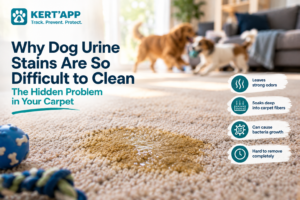
The fastest way to remove dog urine stains from carpet is an enzymatic cleaner, which breaks down uric acid crystals at the molecular level instead of covering the smell. For fresh puddles, baking soda or a 1:1 vinegar-and-water mix works fine. Hydrogen peroxide handles set-in stains on light carpet, and professional extraction is the answer for severe or repeated accidents. Whatever you use, move fast. Every hour that urine sits, it sinks deeper into the fibers, the padding, and eventually the subfloor.
If you’re reading this, you probably just found a spot you really wish you hadn’t. That stomach-drop moment when you turn the corner and see the dark patch. Or maybe it’s been there a while and you’ve been quietly hoping the smell would fade on its own.
Accidents happen, though. New puppy still figuring out the rules, senior dog with a weakening bladder, a stomach bug, a door that stayed closed too long , every dog owner deals with this eventually. What separates a five-minute cleanup from a $600 carpet replacement is how quickly you react and whether you use the right method.
Below are five methods, ordered from cheapest to most serious. You’ll also find what to do in the first half hour, which “helpful” tricks actually make things worse, and how to stop your dog from going back to the same spot. If you’re dealing with more than just urine, our guide on how to remove pet stains naturally covers vomit, feces, and mud too.
Why Dog Urine Is Harder to Remove Than Other Stains
When your dog has an accident, the liquid soaks straight through the fibers, past the backing, into the padding, and sometimes into the subfloor underneath. You’re not cleaning one layer. You’re cleaning three.
The smell comes from uric acid crystals, and plain water won’t touch them. Neither will most all-purpose sprays from under your kitchen sink. Worse, ammonia-based cleaners actively work against you. Ammonia smells like urine to a dog, so you’ve essentially left a sticky note saying “bathroom here.”
There’s also a bacterial side to it. Bacteria feed on the urine left in the carpet, and that breakdown process is what creates the sharp, sour smell that hits you on humid days. The stain can be completely invisible and the odor will still tell you the crystals are alive and well down there , and your dog can smell them far more clearly than you can.
The Science Behind the Odor
Uric acid doesn’t evaporate. It sits, bacteria colonize it, and they release ammonia as a byproduct. That’s exactly why an old stain smells so much worse than a fresh one , it’s had weeks to ferment.
It’s also why you can scrub the surface clean and still wake up to the same smell. You treated what you could see. The real problem was two inches below it.
What to Do Right Now (First 30 Minutes)
The half hour after you spot the stain is worth more than everything you do afterward. Here’s the order.
- Blot , don’t scrub. Grab paper towels or an old towel and press down hard. Hold for a few seconds, lift, repeat with a dry section. Scrubbing back and forth just drives urine deeper into the fibers. Expect to go through 10 to 15 blots before you stop pulling up moisture.
- Rinse with cool water, never hot. Pour a small amount of cool water over the spot and blot again. This dilutes the uric acid before it sets. Hot water does the opposite , it helps set the stain and can make the smell noticeably worse.
- Smell it honestly. Get close and take a sniff. A strong odor means the urine has already reached the padding. A faint one usually means you caught it at the fiber level, which is the best-case scenario.
- Keep your dog out. Block off the area while you work. It stops them returning to the spot immediately, and it keeps them away from whatever you’re about to spray.
Three Mistakes That Make It Worse
- Ammonia cleaners. To your dog’s nose, that’s a bathroom sign. Skip them entirely.
- Heat. No hairdryers, no steam on a fresh stain. Heat locks the odor in.
- Over-wetting. You’re treating a spot, not shampooing the room. Soaking the carpet can damage the backing and invite mold.
Method 1: Baking Soda
You already own this, which is half the appeal. Baking soda is alkaline, so it neutralizes acidic urine while absorbing moisture and odor as it sits. It won’t rescue a stain that’s been there since spring, but for a fresh accident it punches well above its price.
What you need: baking soda, a spray bottle of water, a vacuum, and one night of patience.
Step 1 , Blot first. If there’s still moisture, get it out before anything else.
Step 2 , Sprinkle generously. Cover the stain plus six to twelve inches around it. The odor always spreads wider than the visible mark.
Step 3 , Mist lightly. A few spritzes of water activates it into a light paste. You’re dampening, not drowning.
Step 4 , Wait 12 to 24 hours. Overnight is ideal. Yes, your carpet will look like a crime scene dusted for prints. That’s normal.
Step 5 , Vacuum thoroughly. Two or three passes. Make sure your vacuum bag or canister isn’t already full, or you’ll just push powder around.
Cost: roughly $1–$3 a box, and you’ll use a quarter of it.
When it works: your dog had a small accident by the couch an hour ago and you caught it while it was still damp. Baking soda overnight, vacuum with your coffee, done.
Pro tip: For anything older than a day, pair this with the vinegar step below. Vinegar reactivates the dried urine, baking soda neutralizes what’s left.
Method 2: White Vinegar + Baking Soda , The Natural Combo
This is where you get more aggressive without reaching for chemicals. Vinegar’s acidity reacts with the baking soda’s alkalinity, releasing carbon dioxide that helps lift urine out of the fibers. It sounds like a middle school science fair, but it genuinely works on stains a few days old.
The mix: one part white vinegar (standard 5%), one part water. A cup of each is plenty for most spots.
Step 1 , Blot out any moisture. A drier starting point means the solution penetrates instead of pooling.
Step 2 , Mix in a spray bottle. No precise ratio needed. Equal parts is the whole recipe.
Step 3 , Saturate the spot. You want the solution reaching every layer the urine reached. On an older stain, this rehydrates the dried crystals so they can actually be removed.
Step 4 , Wait 10 to 15 minutes. You may notice the ammonia smell get stronger. Don’t panic , that’s the reaction doing its job.
Step 5 , Blot hard. Clean white towels, firm pressure. You’re pulling the dissolved urine back out.
Step 6 , Finish with baking soda. Sprinkle, mist, wait overnight, vacuum. This second pass handles any leftover odor.
Best for: moderate to older stains, roughly a few days to a couple of weeks old.
Scaling Up for Bigger Areas
Multiple accidents or a large patch? Keep the ratio, raise the volume. A 10×10 area takes about five cups of each in a bucket rather than a spray bottle.
Drying takes longer with this method , plan on 24 to 48 hours. Open the windows, run a fan, and use a dehumidifier if you have one. Damp carpet left alone is its own problem.
One warning on colored carpet: test a hidden corner first. Vinegar is usually safe, but some dyes react badly, and a closet corner is a much better place to find that out than the middle of your living room.
Method 3: Hydrogen Peroxide , For Stubborn, Set-In Stains
Peroxide works through oxidation, breaking urine apart at the molecular level. It’s strong enough to reach the crystallized stuff sitting deep in the fibers, which makes it the best DIY option for stains that have been ignored for weeks.
The trade-off is real, though: peroxide can lighten carpet. On cream, beige, light grey or white, it’s usually fine. On navy, charcoal or chocolate brown, don’t risk it , skip to Method 4.
What you need: 3% hydrogen peroxide from any drugstore, a spray bottle, white towels, and baking soda for the finish.
Step 1 , Spot test. Non-negotiable. Spray a hidden corner, wait ten minutes, check the color. Any lightening at all means stop.
Step 2 , Blot out surface moisture, even on a dry old stain.
Step 3 , Spray the area generously. A little foaming is normal , that’s the oxidation starting.
Step 4 , Blot after 5 to 10 minutes. White towels let you see what’s coming up. Yellow on the towel means the urine is lifting. Keep going until the towel stays mostly clean.
Step 5 , Baking soda overnight, then vacuum in the morning.
Best for: months-old stains that have survived everything else. This is your last stop before calling someone.
Why the Spot Test Really Matters
Ten minutes of testing versus a permanently bleached patch in the middle of your floor. It isn’t a close call.
Drugstore 3% is mild enough that most light carpets handle it without issue, but dye quality varies wildly between manufacturers. Test anyway. Every time. Even if you tested a different room last month.
Method 4: Enzymatic Cleaners , The Gold Standard
This is what professionals reach for, and you can buy the same category of product at any pet store or online.
Enzymatic cleaners contain biological catalysts that target uric acid and the bacteria feeding on it. Instead of covering or neutralizing the odor, the enzymes break the molecular bonds apart so the whole mess can be lifted out. Fresh stain, six-month-old stain , the enzymes don’t particularly care.
What you need: a quality enzymatic cleaner, towels, and genuine patience.
Step 1, Blot out surface liquid. Enzymes work best on damp carpet, not a puddle.
Step 2, Apply generously. Follow the label, but the goal is coverage of the entire affected area, wet but not dripping. Remember the urine spread wider underneath than it looks on top.
Step 3, Let it sit for 24 to 48 hours. This is the part people get wrong. Enzymes are slow by nature. Some products recommend up to two weeks for severe cases. Cover the area loosely with a towel or plastic to keep it from drying out too fast, and keep your dog off it.
Step 4, Blot or extract. Check your product , some want blotting, others want a carpet extractor.
Step 5, Let it dry fully. The enzymes keep working as it dries, so don’t rush it with heat. A fan and open windows are enough.
Best for: deep, embedded, or old stains, and anything that’s come back after a DIY attempt.
Brands worth looking at: Nature’s Miracle (reliable and cheap), Rocco & Roxie (stronger, pricier, good on old stains), and any plant-based option if you prefer eco-friendly formulas.
How to Pick a Good One
- Urine-specific beats general-purpose. A “pet stain” spray isn’t always built for uric acid.
- Check pet and child safety labels, especially if you have cats , a few formulas are dog-only.
- Read the reviews about old stains, not fresh ones. Anything works on a fresh puddle.
- Higher enzyme concentration does more work in less time.
If your dog is having accidents often enough that you’re buying enzymatic cleaner in bulk, it’s worth tracking the pattern. A dog health tracker makes it much easier to spot whether accidents are clustering around a change in food, routine, or health.
Method 5: Professional Carpet Cleaning , When to Call It
Sometimes the honest answer is that this is above your pay grade, and that’s fine. Professionals have truck-mounted extraction equipment and enzyme concentrations you simply can’t buy retail.
Call someone when:
- Your dog keeps returning to the same spot no matter what you do
- The stain is months or years old
- The odor survives every DIY method you’ve tried
- The carpet feels soft or spongy underfoot (that’s padding or subfloor damage)
- You’re selling or renting the place and it has to be gone
What they actually do differently:
They start with an inspection, often with a black light , old urine fluoresces, so they find every spot, including the ones you didn’t know about. Then comes hot-water extraction, which forces enzyme solution deep into the carpet and padding and immediately vacuums it back out under serious suction. Their enzyme products run five to ten times more concentrated than consumer bottles, so they work in days rather than weeks. Most will follow up to confirm the odor is actually gone.
Timeline: usually booked within a week, two to four hours on site, 12 to 24 hours to dry.
A good company will also tell you if it’s unsalvageable instead of taking your money. If they inspect and say the padding needs to come out, believe them.
Quick Comparison: Which Method Should You Use?
| Method | Effectiveness | Time | Best For |
| Baking Soda | Good on fresh stains | 12–24 hrs | Fresh accidents, light odor |
| Vinegar + Baking Soda | Very good | 12–24 hrs | Stains a few days to weeks old |
| Hydrogen Peroxide | Excellent on light carpet | ~24 hrs | Set-in stains, light-colored carpet |
| Enzymatic Cleaner | Excellent | 24–48 hrs | Deep, old, embedded stains |
| Professional Cleaning | Excellent, often guaranteed | 2–4 hrs + drying | Repeat accidents, subfloor damage |
The simple rule: start at the top and only move down if the previous method left a smell behind. Caught it fresh? Baking soda. Day or two old? Vinegar combo. Weeks old on light carpet? Peroxide. Anything deeper? Enzymes. Still there? Make the call.
How to Stop It From Happening Again
Cleaning is the easy half. Keeping your dog from re-marking the same square foot is where most people lose the battle.
The behavior isn’t stubbornness. Dogs urinate where they’ve already marked. If even a trace of odor survives your cleanup, your dog reads that spot as a designated bathroom and goes back. They have somewhere between 10,000 and 100,000 times the scent sensitivity you do, so “I can’t smell it anymore” means nothing to them.
- Eliminate the odor completely, not mostly. This is why enzymatic cleaner is worth the $20. Neutralizing the smell for your nose isn’t the same as removing the source.
- Use maintenance treatments. A light enzymatic spray on accident-prone areas every week or two keeps residue from building up. Our natural pet stain removal guide walks through a simple weekly routine.
- Give repeat spots a purpose. If your dog keeps going near the back door, put a washable pad there. They learn to target the pad, and eventually you move the pad outside. That’s training with a safety net.
- Vacuum at least twice a week. Cleaner fibers mean fresh urine sits on the surface a beat longer before soaking in, which buys you time.
- Rule out a medical cause. This is the one people skip. Sudden accidents in a house-trained adult dog are frequently medical, not behavioral.
Signs It’s a Health Issue, Not a Training Issue
- Suddenly peeing indoors multiple times a day , can point to a UTI, diabetes, or kidney trouble
- Drinking noticeably more water than usual
- Unusually strong ammonia smell, which often means concentrated urine from dehydration or illness
- Straining, whining, or obvious difficulty while urinating
Senior dogs commonly develop incontinence, and that deserves a vet visit rather than a correction. Weight plays a role too , extra pounds put pressure on the bladder, and our guide to obesity in dogs explains how that connects to urinary problems. If you want to catch changes early, logging water intake, bathroom trips, and weight in a pet health tracker app gives your vet something concrete to work with instead of “I think it started a few weeks ago?”
Quick Reference: Urine on Hardwood, Tile, and Vinyl
Hardwood: act immediately , wood is porous and urine can stain or warp it within hours. Blot, then wipe with a 1:1 vinegar-water solution and dry right away. Never leave it sitting wet. Dark stains or warping usually mean sanding and refinishing.
Tile and grout: tile itself is forgiving; grout is not. Use the vinegar and baking soda method, scrub the grout lines with a stiff brush, then reseal the grout so it doesn’t absorb the next accident.
Vinyl or laminate: clean with vinegar and water, then dry fast. Laminate swells if moisture sits in the seams, so speed matters more than scrubbing here.
Frequently Asked Questions
How long does it take to remove dog urine smell from carpet completely?
Fresh stains usually clear within 24 hours using baking soda or vinegar. Old stains need 24–48 hours with an enzymatic cleaner, and humid rooms take roughly twice as long.
Can old dog urine stains ever be fully removed?
Often yes, with enzymatic cleaners or professional extraction. But if urine reached the padding or subfloor, that layer may need replacing before the smell truly disappears.
Is enzymatic cleaner safe for kids and other pets?
Yes, when used as directed , most are non-toxic and pet-safe. Keep kids and pets off the area until it’s fully dry, and check the label for cat safety.
Why does my dog keep peeing in the same spot?
Because they can still smell the old urine, even when you can’t. Complete odor removal is the only fix, and behavior typically improves within a few days.
What’s the difference between baking soda and enzymatic cleaners?
Baking soda neutralizes and absorbs surface odor. Enzymes break apart the uric acid itself, which is why they work on old stains and baking soda doesn’t.
Can I use bleach on dog urine?
No. Bleach and urine produce toxic chlorine gas, and it damages carpet without removing the uric acid. Use enzymes, vinegar, or peroxide instead.
How often should I deep clean carpets if I have a dog?
Deep clean with enzymes two to four times a year, vacuum twice a week, and book a professional cleaning annually. More often if accidents are frequent.
Will vinegar permanently remove dog urine odor?
Not on its own, especially for old stains. Vinegar loosens the compounds, but you need baking soda or an enzymatic cleaner afterward to finish the job.
Final Thoughts: Clean Carpet, Calmer Dog
Dog urine on carpet is annoying, but it’s a solvable problem. You now have five methods that cover every scenario, from the $2 box in your pantry to the guy with the truck-mounted extractor.
Remember what you’re actually fighting: not a visible stain, but uric acid crystals sitting in the fibers and padding, feeding bacteria and broadcasting an invitation to your dog. Speed matters. Complete odor removal matters more.
Your action plan in one line: fresh accident → baking soda. A day or two old → vinegar and baking soda. Weeks old → enzymatic cleaner, or peroxide if your carpet is light. Repeat accidents or a spongy floor → call a professional.
And if the accidents keep coming, the carpet isn’t really the problem. Frequent urination, excess thirst, or a sudden change in bathroom habits usually means something is going on with your dog’s health , and those patterns are almost impossible to notice by memory alone.
Track the Pattern Before It Becomes a $600 Carpet Bill
Start tracking your dog’s health free with KERT →
Log bathroom trips, water intake, weight changes, and vet visits in one place, and get reminders so nothing slips through the cracks. It takes about thirty seconds a day, and it turns “I think this started a while ago” into a clear timeline your vet can actually use.
Want to see what’s worth tracking first? Start with our breakdown of the health metrics your dog actually needs, or compare the options in our review of the 6 best pet health apps in 2026.
Related Reading
- How to Remove Pet Stains Naturally: 5 Best DIY Methods
- Dog Health Trackers: The Metrics That Actually Matter
- Obesity in Dogs: Causes, Risks, and Solutions
- How Much to Feed a Dog by Weight: Vet-Approved Guide
- The Best Way to Track Your Pet’s Weight and Health Changes
- Dog Vaccination Schedule: Complete Guide by Age
- Never Miss a Vet Appointment Again