
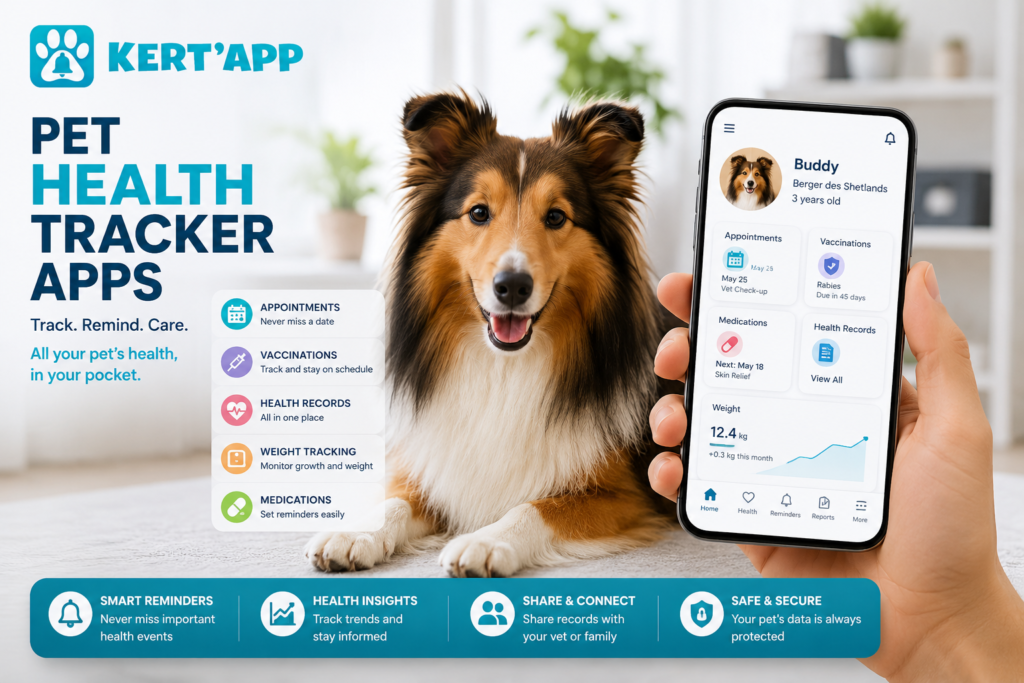
If you’ve ever stood in a vet’s waiting room trying to remember when your dog last had his rabies shot, you already know why pet health tracker apps exist. Sticky notes and mental math only get you so far, especially once you’ve got more than one animal to keep tabs on.
A good pet health tracker app takes that guesswork off your plate. It holds vaccination dates, medication schedules, weight trends, and vet appointments in one place, so you’re not digging through old texts or a paper folder every time something comes up.
This guide walks through what these apps actually do, which features matter, and how to pick one that fits your pet, not just the one with the flashiest app store screenshots.
What Is a Pet Health Tracker App (And Why Do You Need One)?
A pet health tracker app is a mobile tool that stores and organizes your pet’s medical and wellness information: vaccinations, medications, weight, vet visits, and sometimes behavior or activity data.
It’s worth separating this from a GPS pet tracker early on, because the two get mixed up constantly. A health tracker app manages records and reminders. A GPS tracker (like a collar device) tells you where your pet physically is. Some products blend both, but they solve different problems, and we’ll get into that distinction later.
For most pet owners, the appeal is simple: fewer missed appointments, fewer “wait, did we already do this shot?” moments, and a clearer picture of whether something’s actually changed in your pet’s health, or if you’re just imagining it.
Key Features to Look for in a Pet Health Tracker App
Not every app needs to do everything. But a handful of features consistently separate the genuinely useful ones from the ones that just look nice.
Vaccination and Medication Reminders
This is the feature most people open the app for in the first place. A decent tracker should nudge you before a vaccine is due, not after. If you’ve ever paid a late fee or an extra vet visit because a booster got missed, you already know why this matters. Our guide on veterinary reminder software breaks down what a solid reminder system should actually include, whether it’s built into your clinic’s software or a standalone app.
Weight and Activity Logging
Weight change is often the first sign something’s off, sometimes before your pet shows any other symptom. Apps that let you log weight over time turn a vague feeling (“she seems thinner lately”) into an actual trend line you can show your vet. If you want the full breakdown of why this matters and how often to check, we’ve covered how to track your pet’s weight and health changes in more detail.
Vet Appointment Scheduling
Beyond reminders, the better apps let you actually log the appointment itself, what was discussed, what was prescribed, so you’re not relying on memory three months later.
Document and Record Storage
Prescriptions, lab results, insurance paperwork. Being able to snap a photo and attach it to your pet’s profile beats keeping a folder of receipts in a kitchen drawer.
Multi-Pet Support
If you’ve got a dog and a cat, or three of anything, the app should let you switch between profiles without re-entering the same information twice.
Best Pet Health Tracker Apps for Dogs
Dog-focused apps tend to lean into two different directions, and it’s worth knowing which one you actually need before you download five of them.
Apps Focused on Activity Tracking
These are built around movement: steps, play time, sometimes sleep patterns. They’re genuinely useful for active breeds or dogs recovering from surgery, where your vet might ask you to monitor activity levels directly.
Apps Focused on Medical Record-Keeping
These prioritize vaccination history, medication logs, and vet visit notes over step counts. If your main frustration is forgetting when the last flea treatment was, this is the category that solves your actual problem.
Most dog owners end up caring more about the second category once the novelty of activity graphs wears off. Step counts are nice; not missing a heartworm dose is the thing that actually matters.
Best Pet Health Tracker Apps for Cats
Cats complicate things a bit, mostly because they’re better at hiding symptoms than dogs are. A cat can be in real discomfort and still act mostly normal until things get serious.
This is where an app that tracks subtle patterns, eating habits, litter box frequency, weight, becomes more valuable than one built around activity levels. Indoor cats especially benefit from apps that focus on routine changes rather than movement, since a cat sleeping 16 hours a day isn’t unusual to begin with.
If you’re a multi-cat household, look specifically for apps that keep each cat’s data cleanly separated. Mixing up which cat had which symptom defeats the purpose fairly quickly.
Free vs. Paid Pet Health Tracker Apps: What’s the Real Difference?
What Free Tiers Usually Include
Most free versions cover the basics well: vaccination reminders, a single pet profile, and simple record storage. For a lot of pet owners, that’s genuinely enough.
When a Paid Plan Is Actually Worth It
Paid tiers usually add multi-pet management, cloud backup, document storage limits that don’t fill up in a month, and sometimes direct sharing with your vet’s office. If you’ve got multiple pets or you’re the type who wants everything backed up somewhere that isn’t just your phone, the upgrade tends to pay for itself in reduced hassle rather than any single dramatic feature.
There’s no universal right answer here. A single, healthy dog with a straightforward vaccination schedule probably doesn’t need a paid plan. A household juggling a senior cat’s medications alongside a puppy’s shot schedule probably does.
Pet Health Trackers vs. GPS Pet Trackers – They’re Not the Same Thing
This mix-up comes up often enough that it deserves its own section. Products like Life360’s pet tracker or Tile’s pet tracker are GPS devices, physical hardware you attach to a collar so you can locate your pet if they wander off. They’re built for location, not health records.
A pet tracking device for cats, similarly, is usually about keeping tabs on an outdoor or semi-outdoor cat’s whereabouts, not their vaccination history.
If what you actually want is “will this tell me where my dog is right now,” you’re looking for a GPS tracker, not a health tracker app. If you want “will this tell me when my dog’s next vaccine is due,” that’s the health tracker category this guide is about. Some products try to do both, but it’s worth checking carefully whether the health-tracking side is a genuine feature or just a minor add-on to a GPS-first product.
Dog Activity Tracker Apps: Do They Actually Improve Your Dog’s Health?
Somewhat, but let’s not oversell it. A dog activity tracker app can highlight if your dog’s movement has dropped noticeably compared to their usual baseline, which is a legitimate early signal worth mentioning to your vet.
What it won’t do is diagnose anything on its own. Think of it as a data point, not a verdict. The value is in noticing a pattern early enough to ask the right question at your next vet visit, not in replacing that visit altogether.
How Pet Health Tracker Apps Help During Vet Visits and Insurance Claims
Having organized records doesn’t just save you time, it can genuinely speed up a vet visit, since you’re not trying to recall dates from memory while your pet is anxious in the waiting room.
It matters even more for insurance. Claims typically require specific documentation: dates of treatment, diagnosis details, and proof of prior conditions or vaccinations. We’ve laid out exactly what pet health information insurers usually ask for in a separate guide, and having that information already organized in an app makes the claims process noticeably less painful.
Common Mistakes Pet Owners Make With Health Tracking Apps
A few patterns show up again and again:
- Downloading an app and never actually filling it in. The app only works if the data’s in it.
- Using a different app for each pet. Defeats the purpose of having one central record.
- Not sharing access with other caregivers. If someone else, a partner, a pet sitter, is also involved in your pet’s care, they need visibility into the same records. If you’re bringing in outside help, our piece on what to ask a pet sitter about their experience is worth a read alongside setting up shared access.
- Ignoring the reminders once they start feeling routine. Notification fatigue is real; it’s worth adjusting settings rather than muting everything.
How to Choose the Right App for Your Pet
Before downloading anything, it helps to be honest about what problem you’re actually trying to solve:
- Do you mainly need reminders, or full record-keeping?
- One pet or several?
- Do you want a free tool, or is paid worth it for backup and sharing?
- Are you trying to track location (GPS) or health data (records)? These are different products.
Answering these first saves you from downloading three apps and using none of them properly.
Key Takeaways
- Pet health tracker apps and GPS trackers solve different problems. Know which one you actually need before choosing.
- The features that matter most are vaccination reminders, weight logs, and vet visit records, not flashy extras.
- Free apps cover the basics well; paid tiers make more sense for multi-pet households or anyone who wants backup and sharing.
- Cats benefit more from routine and symptom tracking; dogs benefit more from activity monitoring, though both need medical record-keeping at their core.
- Organized records make vet visits faster and insurance claims noticeably less stressful.
FAQs
What are the best free pet health tracker apps?
Most free tiers cover vaccination reminders, a single pet profile, and basic record storage, which is enough for many single-pet households. Paid upgrades typically add multi-pet support and cloud backup.
What’s the best pet health tracker app overall?
There isn’t a single universal answer. The right app depends on whether you need reminders, full record storage, activity tracking, or all three, and how many pets you’re managing.
Are there pet health tracker apps made specifically for cats?
Yes, some apps focus on routine and symptom tracking (eating habits, litter box frequency, weight) rather than activity levels, which suits cats better since they hide illness well.
What’s the best pet health tracker app for dogs?
It depends on your priority. Apps built around activity tracking suit active or recovering dogs; apps built around medical records suit owners mainly trying to stay on top of vaccinations and medications.
Is there a good free pet management app?
Yes, several free options handle vaccination reminders and basic record storage well. The tradeoff is usually limited storage or single-pet support until you upgrade.
What does a DogCat-style app do?
Apps designed for both dogs and cats typically let you manage separate profiles for each pet type under one account, covering vaccination schedules, weight, and appointment history for both species.
What’s a good dog activity tracker app?
Look for one that tracks movement against your dog’s own baseline over time, rather than comparing to generic benchmarks. That’s what makes a drop in activity meaningful enough to mention at a vet visit.
What’s the best app for tracking pet health overall?
The best choice is the one you’ll actually use consistently. An app with fewer features that you update regularly beats a feature-packed one that sits untouched after the first week.
Conclusion
The best pet health tracker app isn’t necessarily the one with the most features, it’s the one that actually fits how you and your pet live day to day. Start with what’s actually frustrating you right now, missed reminders, scattered records, no clear weight history, and pick based on that, rather than chasing every feature on an app store listing.
Want an easier way to stay on top of your pet’s vaccinations, vet visits, and health history? Download Kertapp on Google Play and keep it all in one place. You can also explore more pet care guides on kert app.