
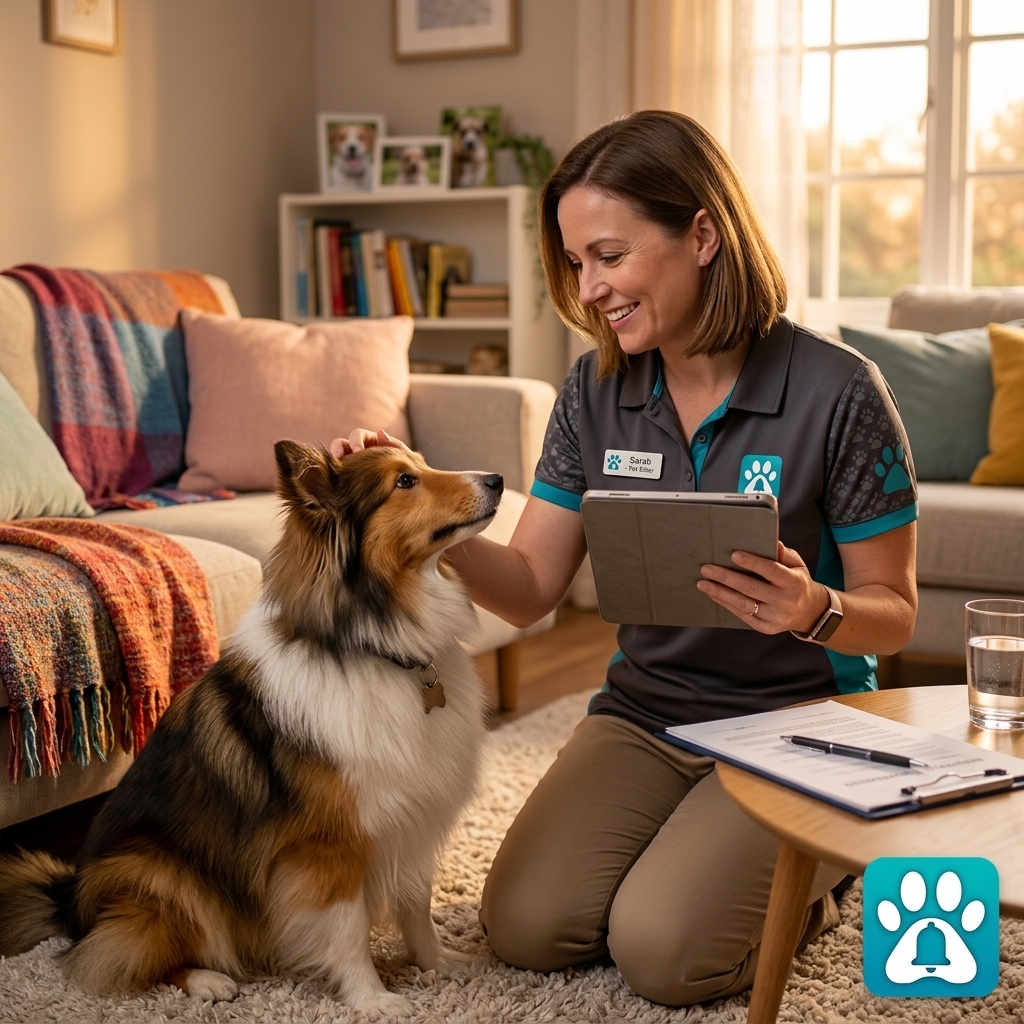
Handing your house keys and your dog, cat, or nervous cockatiel to someone you met on an app three days ago takes a leap of faith. A reference check is how you turn that leap into a calculated step.
Most pet owners call one reference, hear “yeah, she’s great,” and book the sitter on the spot. That’s not really a reference check. It’s a formality. A real reference check digs into the specific situations that reveal how a sitter actually behaves when things get messy: a dog who won’t eat, a storm that trips the power, a cat who goes missing for six hours.
This guide walks through the exact questions to ask a pet sitter’s references, how to verify their credentials, and how to confirm the person you’re trusting is who they say they are. We’ll also cover the paperwork side insurance, bonding, certifications, and licensing since a great personality doesn’t mean much if there’s no coverage behind it.
Why a Quick “She’s Great!” Isn’t a Real Reference Check
A reference who gushes for ten seconds and hangs up hasn’t told you anything useful. You already assumed the sitter was likeable, that’s why they made your shortlist. What you need to know is how they handle the unglamorous parts of the job: showing up on time, noticing when something’s wrong, and communicating like an adult when it is.
Treat the reference call like a short interview. Ask specific, scenario-based questions instead of yes-or-no ones. “Was she reliable?” gets you a shrug. “Can you walk me through a time she had to change plans last-minute?” gets you a story and stories are where the truth lives.
How Do I Interview a Pet Sitter or Dog Walker?
Before you even reach the reference stage, the interview itself should do some heavy lifting. Treat it less like a chat and more like hiring someone for a job that involves your front door key and a living creature.
A solid pet sitter interview covers three things: practical logistics, hands-on experience, and how the person reacts under pressure. Ask about their availability, their emergency protocol, and how many pets they typically handle at once. Watch how they talk about animals. Genuine pet people tend to ask you just as many questions back (about your pet’s routine, quirks, and medical history) as you ask them.
Once the interview feels solid, move to references. A sitter with real experience should be able to hand you two or three names without hesitation. Hesitation itself is a data point.
What Questions Should I Ask During a Pet Sitter Meet and Greet?
The in-person (or video) meet and greet is your chance to watch the sitter interact with your pet directly, not just talk about pets in the abstract. Useful questions include:
- How would you handle it if my dog refused to eat or seemed lethargic?
- What’s your protocol if you can’t reach me in an emergency?
- Have you cared for a pet with [your pet’s specific condition anxiety, diabetes, mobility issues?
- Do you administer medication, and have you done it before?
- What does a typical visit or overnight stay look like, step by step?
Watch your pet’s body language during this meeting too. A relaxed tail or a curious approach tells you something a reference call never will.
The Core Questions to Ask Every Pet Sitter Reference
This is the core of the vetting process. When you call a reference, you’re not confirming the sitter is nice, you’re confirming they’re competent, consistent, and honest when things don’t go according to plan.
Questions About Day-to-Day Reliability
- How long did the sitter work with you, and how many visits or stays did that include?
- Did they arrive on time, and did you get updates when they didn’t?
- Did you ever need to cancel or reschedule last-minute? How did they handle it?
- Would you rebook them without hesitation?
Questions About Animal-Specific Experience
- What type of pet did they care for, and were there any special needs (medication, mobility limits, behavioral issues)?
- Did they follow your instructions closely, or did they improvise?
- How did your pet respond to them over time, did trust build, or did your pet stay guarded?
Questions About Communication and Problem-Solving
- Did they send photo or video updates, and how often?
- Can you describe a time something went wrong, a missed feeding, an escape attempt, a vet visit and how they handled it?
- Did they proactively flag issues (a limp, a scratch, unusual behavior) or did you have to ask?
Questions About Trust and Judgment
- Did you ever notice anything in your home out of place, or feel uneasy about access to your property?
- Would you leave this person alone with your pet again without a trial visit first?
If a reference struggles to answer these with specifics, or their answers feel rehearsed, treat that as useful information not proof of a problem, but a reason to ask a second reference the same questions.
How Do I Verify Pet Sitter References?
References are only as good as their source. A few practical steps make the process harder to fake:
- Call, don’t text. Tone and hesitation carry information that a text reply hides.
- Ask for two references from different time periods, not two references from the same month; this shows consistency over time, not a single lucky booking.
- Cross-check the relationship. Ask the reference how they found the sitter and how long ago the service happened. Vague answers are a flag.
- Look them up independently. Search the reference’s name alongside the sitter’s business name to confirm the review or relationship shows up publicly (a Google review, a Nextdoor post, a testimonial on the sitter’s site).
- Ask the sitter for a recent reference, not just their best one. Anyone can produce one glowing review from three years ago.
What Certifications Should a Professional Pet Care Provider Have?
Certification isn’t legally required to walk dogs for money in most of the US, which is exactly why it matters when a sitter has one. It signals they went out of their way to prove their competence.
The two recognized options in the US pet-sitting industry are:
- CPPS – Certified Professional Pet Sitter, awarded by Pet Sitters International. Candidates must be at least 18, hold a high school diploma or equivalent, and pass a proctored, multiple-choice exam covering pet health and emergencies, behavior, first aid and CPR, client relations, and business practices. The exam covers health and emergency procedures, behavior and body language, first aid and CPR, client relations, and business practices. Certification runs on a three-year renewal cycle backed by continuing education.
- NAPPS Certification, from the National Association of Professional Pet Sitters. This structured course and exam cover animal care across species, medication administration, emergency management, ethics, and the fundamentals of running a service business.
Is the CPPS Certification Legit?
Yes CPPS is the pet-sitting industry’s most recognized knowledge-based credential, run by Pet Sitters International, an organization that’s operated since 1994. It’s not a government license, but it’s a genuine, exam-based standard that most casual sitters never bother pursuing. If a sitter holds it, that’s a meaningful signal.
Alongside certification, look for a current pet first aid and CPR course, proof of liability insurance and bonding, and if the sitter operates a boarding or grooming facility rather than in-home visits the correct state or city permits (more on that below).
How Do I Check If a Pet Sitter Is Actually Insured and Bonded?
Insurance protects your pet if something medical goes wrong during their care. Bonding protects your property if something goes missing or gets damaged. They cover different risks, and a sitter should be able to explain both without stumbling.
Ask for the name of their insurance provider and their policy number, then verify it directly with the insurer rather than taking a screenshot at face value. Legitimate pet-sitting businesses carry commercial general liability coverage a personal homeowner’s policy typically will not cover a professional pet-sitting incident, so don’t assume your own insurance fills the gap.
What Is the Difference Between Pet Sitter Insurance and Bonding?
Insurance covers accidents and injuries, a pet getting hurt, a vet bill from an incident during a visit. Bonding is closer to a security deposit backed by a third party: if a sitter steals or damages something, the bond compensates you up to its coverage limit. A professional sitter typically carries both, and reputable pet-sitting associations offer discounted rates on both as a certification perk which is one more reason certified sitters tend to be insured ones too.
How Do Pet Sitter Background Checks Really Work?
A background check confirms identity and criminal history; it does not confirm someone is good with animals. Treat it as one layer, not the whole picture.
Ask the sitter which service ran their check (national criminal database searches, county-level checks, and sex offender registry searches vary in depth) and how recently it was completed. Many independent sitters run their own check through a consumer background-check service and can share a redacted summary. Sitters who work through a platform (Rover, Wag, and similar apps) typically go through the platform’s built-in screening to ask which tier of check that platform performs, since screening depth varies by company.
What Red Flags Show Up in a Pet Sitter Background Check?
Watch for gaps in employment history the sitter can’t explain, inconsistent business names or addresses across platforms, an inability to produce any references at all, and reluctance to share basic verification details like a business license number or insurance provider. None of these individually is disqualifying, but two or more together are worth a pause.
How Can I Verify If a Boarding Facility Is Licensed by the State?
If you’re boarding rather than booking in-home visits, licensing works differently than for an independent sitter. Boarding kennels, pet-sitting businesses, and pet care services fall under NAICS code 812910 – Pet Care (except Veterinary) Services, which covers establishments primarily engaged in providing pet care services such as boarding, grooming, sitting, and training pets. This code is mainly a business classification used for taxes, insurance, and licensing lookups; it’s a useful way to confirm a facility is registered as a legitimate business rather than an unregistered operation.
To check actual licensing, contact your state or county’s department of agriculture or health department, since kennel and boarding licensing requirements vary significantly by state. Many states require a facility inspection before a license is granted, and a legitimate boarding operation should be able to produce that license on request, no hesitation, no excuses.
Is It Illegal to Board Dogs in Your Home Without a License?
It depends entirely on your state and city. Some jurisdictions exempt small-scale, occasional home boarding from licensing; others require a permit the moment money changes hands, regardless of scale. New York City, for example, requires anyone running a business that boards, grooms, or sells cats, dogs, or small animals to have a supervising manager who holds a Health Code–mandated certificate (more on that below) and to pass a facility inspection. Before assuming a home-boarding side gig is exempt, check your specific city and state agriculture or health department rules directly “everyone does it” is not a legal defense.
How Do I Interview a Pet Sitter’s Character, Not Just Their Résumé?
References tell you about competence. A few extra questions during the interview tell you about character:
- How do you handle a pet that doesn’t like you at first?
- What would you do if you noticed an unrelated household issue while a pet sitting on a leak, an open window, or a delivery at the door?
- Can you describe your own pet-care philosophy in a sentence or two?
Answers here are less about being “right” and more about whether the sitter’s instincts match how you’d want your home and pet treated when you’re not there to supervise.
How to Do a Trial Run With a New Pet Sitter
Even a perfect reference check and clean background report don’t replace a real trial. Book a short paid visit or a single overnight before committing to a full week away. Set up a camera (and tell the sitter it’s there transparency works both ways), leave clear written instructions, and debrief afterward on what went well and what didn’t.
A trial run is also where you confirm the small logistics: does the sitter lock up properly, do they follow feeding instructions to the letter, do they send the updates they promised. These details matter more over a two-week vacation than they do over one afternoon.
Key Takeaways
- Ask reference-check questions that require a story, not a yes-or-no answer specifics reveal more than enthusiasm does.
- Verify references by phone, cross-check their relationship to the sitter, and ask for at least one recent reference.
- CPPS (Pet Sitters International) and NAPPS certification are the two recognized US pet-sitting credentials, and both require passing a knowledge-based exam.
- Insurance and bonding cover different risks ask for provider names and confirm coverage directly with the insurer.
- Background checks confirm identity and criminal history, not animal-handling skill; treat them as one layer of vetting.
- Boarding and pet care businesses fall under NAICS code 812910, and licensing requirements for boarding vary by state and city and are always confirmed directly with your local agriculture or health department.
- A short paid trial run catches details that references and paperwork can’t.
FAQ
What questions should I ask a pet sitter for reference about their experience?
Ask about reliability (were they on time, did they communicate delays), animal-specific experience (did they handle your pet’s needs correctly), problem-solving (how did they respond when something went wrong), and trust (would the reference rebook them without a trial visit). Scenario-based questions get more honest answers than yes-or-no ones.
Which US federal agencies regulate the pet food industry?
The FDA‘s Center for Veterinary Medicine regulates the pet food industry for legality, truthfulness, accuracy, and fairness, covering labeling, ingredient safety, and manufacturing standards. The USDA ensures pet foods are labeled so they aren’t mistaken for human food and monitors ingredient handling, while the FTC regulates pet food advertising. State departments of agriculture also play a role, and the Association of American Feed Control Officials (AAFCO) , while not a government regulator, sets model standards that many states adopt into law.
What is the NAICS code for pet care?
NAICS code 812910 covers Pet Care (except Veterinary) Services establishments primarily engaged in providing pet care services such as boarding, grooming, sitting, and training pets. Veterinary services, horse boarding, and pet transportation fall under separate codes.
What qualifications do I need to become a pet sitter?
There’s no universal license required to become an independent pet sitter in most of the US, but professional credibility usually comes from a mix of things: liability insurance and bonding, a pet first aid/CPR certificate, and optionally a knowledge-based certification like CPPS or NAPPS. The CPPS exam requires applicants to be at least 18 with a high school diploma or equivalent, and covers health and emergency procedures, animal behavior, first aid and CPR, client relations, and business practices. If you plan to board animals commercially rather than just visit them, check your state and city for separate business licensing requirements.
What is the certificate in Animal Care and Handling in NYC?
New York City’s Health Code requires that all pet shops or businesses that sell, groom, or board cats, dogs, or other small animals have someone with a Certificate in Animal Care and Handling on duty whenever the business is open to the public. The course runs twelve hours over two six-hour days, and completing it plus passing the final exam earns the certificate. The certification doesn’t expire, though the health department can require a refresher course after ongoing violations or a disease outbreak involving animals in the holder’s care. This requirement applies to boarding, grooming, and pet-shop businesses specifically not to independent, in-home pet sitters who never operate a licensed facility.
How do I verify a pet sitter’s certificate of insurance?
Ask for the insurer’s name and the policy number, then call the insurance provider directly to confirm the policy is active and covers professional pet-sitting liability not just a generic personal policy.
Do pet sitting apps like Rover run background checks?
Most major pet-sitting platforms run some form of background screening before approving sitters, but the depth of that check varies by company and can change over time. Ask the sitter directly which platform screened them and confirm current details on the platform’s own trust and safety page, since this is the kind of policy detail that gets updated.
Ready to Keep Every Sitter on the Same Page?
Once you’ve found a sitter you trust, the next challenge is making sure they actually have the information they need: feeding schedule, medication times, vet contact, allergies, all of it. KERT’APP lets you build a complete health and care profile for your pet and share it with a pet sitter, trainer, or family member with a single email code, so nothing gets lost between “trust me, I’ve got this” and an actual emergency. See how it works.