
Most pet owners only find out their dog or cat has gained too much weight when the vet mentions it at an annual check-up, by which point the problem has been building quietly for months. The best way to track your pet’s weight and health changes is to combine regular home weigh-ins, a Body Condition Score (BCS) check, an activity log, and a pet health app that sends you reminders before things slip. These four habits work together to catch small changes early before they turn into costly vet visits or serious health problems.
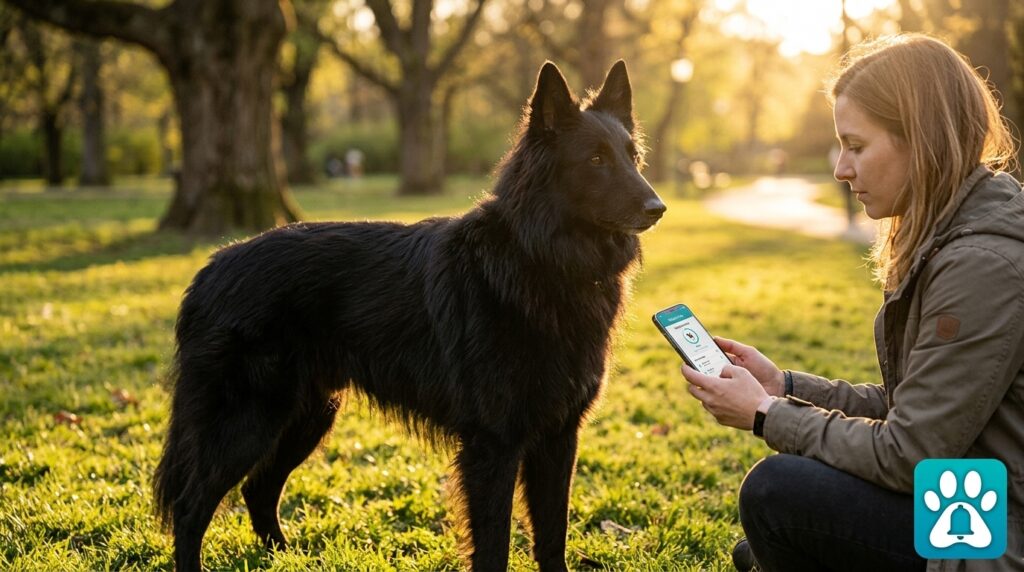
This guide walks you through every method, from the rib test you can do right now to building a consistent tracking routine that doesn’t fall apart after two weeks.
Why Tracking Your Pet’s Weight Actually Matters
Obesity is widely considered the silent killer in dogs and cats. According to the Association for Pet Obesity Prevention, more than 50% of dogs and approximately 60% of cats in the United States are overweight or obese. The numbers are similar across the UK and Europe.
The health consequences compound over time. Excess weight in pets is directly linked to a shorter lifespan, higher risk of type 2 diabetes, chronic joint pain, heart disease, breathing difficulties, and certain cancers. In cats specifically, obesity is one of the leading triggers of hepatic lipidosis, a potentially fatal liver condition.
The problem is that weight gain in pets is gradual. A dog gaining 100 grams a week won’t look visibly different for months. By the time the change is obvious to the naked eye, the pet’s body has already been under strain for a long time.
Consistent home monitoring changes that. It gives you a baseline, makes trends visible early, and means you walk into every vet visit with data rather than guesswork.
How to Tell If Your Pet Is at a Healthy Weight Without a Scale
You don’t always need a scale to assess your pet’s weight. Two methods, the rib test and the Body Condition Score, give you a practical picture in under two minutes.
The Dog Weight Rib Test
Place both hands on your pet’s ribcage, thumbs on the spine, fingers spread along the sides. Press gently.
- Can feel ribs easily with light pressure, minimal fat covering: Healthy weight range.
- Have to press firmly to feel any ribs: Likely overweight.
- Ribs are highly visible or felt without any pressure: Possibly underweight.
This rib test works across species; it’s used for dogs, cats, and even horses and rabbits with minor adjustments.
The Body Condition Score (BCS): The 1–9 Scale
The BCS is the standard tool vets use to assess pet weight beyond a number on a scale. It evaluates overall body shape, fat coverage, and muscle mass through both visual and physical assessment.
The scale runs from 1 to 9:
- 1-3: Underweight. Ribs, spine, and hip bones are visibly prominent with no fat covering.
- 4-5: Ideal. Ribs palpable with minimal fat, visible waist from above, slight belly tuck from the side.
- 6-7: Overweight. Ribs are difficult to feel, the waist is barely visible, and fat deposits begin over the spine and tail base.
- 8-9: Obese. Ribs buried under fat, no waist definition, heavy fat deposits.
The important thing to understand is that a number on the scale alone doesn’t tell you enough. A 12-pound cat could be perfectly healthy or significantly obese, depending on their frame size and breed. The BCS adds the context, the number can’t. Use the pet BCS chart alongside your weigh-ins for the most accurate picture.
How to Weigh Your Pet at Home
The most reliable method for small and medium pets is the subtraction method:
- Step on your bathroom scale. Note your weight.
- Pick up your pet and step back on.
- Subtract your weight from the combined total.
This works well for cats and dogs up to around 25–30 kg. For larger dogs, many vet clinics will let you use their waiting room scale between appointments; it’s worth asking. Alternatively, luggage scales placed flat on the floor work for dogs that will stand still.
How often should you weigh your pet?
Frequency depends on life stage:
- Puppies and kittens: Monthly until 6 months old, then every two months until one year. Growth is fastest in the first five months, so this is when tracking matters most.
- Adult dogs and cats (1–7 years): Every one to three months is sufficient if the pet is healthy and stable.
- Senior pets (7+ years): Return to monthly monitoring. Health changes, including weight loss from muscle wasting or weight gain from reduced activity, accelerate significantly in senior years.
- Pets on a weight loss plan: Every two weeks. Safe weight loss in dogs is generally 1–2% of body weight per week. For a 20 kg dog, that’s 200–400 grams per week, maximum; anything faster risks muscle loss and nutritional deficiency.
Record the date and weight every time. A single number means little. A series of numbers over months tells a story.
Beyond the Scale: Other Health Changes to Log Regularly
Weight is just one signal in a much larger picture. Consistent health monitoring means watching for changes across several areas at once. Here’s what to log alongside your weigh-ins:
- Energy levels are often the first thing owners notice, but the last thing they write down. If your dog suddenly has no interest in a walk they used to pull you toward, that’s worth noting with a date.
- Coat and skin reflect what’s happening internally. A dull coat or unexplained bald patches often point to nutritional gaps or thyroid issues long before other symptoms appear.
- Appetite shifts matter in both directions. A cat eating more but losing weight is a textbook hyperthyroidism pattern, and that combination specifically is a reason to call your vet, not wait for the next check-up.
- Water intake is one of the most underlogged health signals. A dog that starts emptying their bowl twice as fast as usual could be showing early signs of diabetes, kidney disease, or Cushing’s syndrome.
- Bathroom habits, frequency, consistency, straining, or any blood are uncomfortable to think about, but important to track. Changes here often surface before anything else does.
- Breathing at rest should always be effortless. In cats, especially, and in flat-faced breeds like Bulldogs and Pugs, laboured breathing when they’re doing nothing at all is never normal.
- Gum colour is the fastest at-home health check most owners never do. Press your finger against your pet’s gum and release; the color should return to pink within two seconds. Pale, white, blue, or yellow gums mean get to a vet immediately, not tomorrow.
- Reproduction cycles in intact females are worth logging too. Missed or irregular heat cycles can be an early sign of hormonal imbalance or, in worst cases, pyometra, which is a veterinary emergency.
Most pet owners track weight and forget everything else. Logging all of these health signals together, even briefly, gives you and your vet a far more complete picture of your pet’s health changes over time.
The 90/10 Rule and Feeding Guidelines Worth Knowing
The 90/10 rule means that treats should make up no more than 10% of your dog’s total daily calorie intake. The remaining 90% should come from a nutritionally complete, balanced diet. This sounds simple, but it’s one of the most commonly broken feeding rules, a small dog only needs around 200–300 calories per day, and a few treats can easily account for 30–40% of that without the owner realising.
Other feeding principles that affect how you track pet weight:
Adjust portions seasonally
Pets tend to be more active in summer, longer walks, outdoor play, and less active in winter. A dog that hiked with you every weekend in July may barely leave the sofa in January. Calorie needs shift accordingly. Slightly reducing daily food intake in lower-activity months helps prevent gradual winter weight creep.
Life stage matters more than most owners realise
Puppies need nearly double the calories per pound compared to adult dogs because of the energy cost of growth. As a rough guide, recalculate your puppy’s food portions monthly until six months old, then every two months until their first birthday.
How much weight should a dog lose per month?
Aiming for 1–2% of body weight per week means a 20 kg dog can safely lose roughly 800g–1.6 kg per month. Going faster risks muscle loss rather than fat loss.
How a Pet Health App Makes Consistent Tracking Actually Stick
The biggest obstacle to tracking pet weight and health changes isn’t knowledge; it’s consistency. Most owners start with good intentions and stop within a few weeks because the habit relies entirely on memory.
This is where a purpose-built pet care app makes a real practical difference.
KertApp was built specifically to solve this problem. Designed by a family of breeders and developers, it handles the remembering so you don’t have to.
Here’s how each feature connects directly to health monitoring:
Activity and Growth Tracking
Log your pet’s weight and height directly into visual growth curves. Set walk reminders so activity stays consistent, and record the duration and distance of each outing. Over time, the curves make trends visible that you’d never notice check-by-check.
Smart Reminders
Automatic notifications for vaccinations, worming treatments, flea control, vet check-ups, and pet food shopping. Missed treatments are one of the most preventable causes of health decline and one of the easiest things to forget in a busy household.
Treatments Monitoring
Log every dose of every medication. Whether it’s a daily tablet, a monthly preventative, or a course of antibiotics, KERT’APP keeps an accurate record so nothing is doubled up or missed.
Shared Pet Files
One of KERT’APP’s most practical features for multi-person households. With a simple email code, you can share your pet’s complete file with family members, a pet sitter, a trainer, or a stable manager. Everyone who cares for the animal sees the same up-to-date information and can add notes, so no one is working in the dark.
Reproduction Tracking
For intact pets, logging breeding cycles over time lets KERT’APP analyse frequency and flag irregularities, a genuinely underserved feature that most pet health apps ignore entirely.
KertApp works across species, dogs, cats, horses, rabbits, and more, and is available on Android and via the web. The free discovery plan lets you start with one pet at no cost.
When to Stop Tracking at Home and See a Vet
Home monitoring is powerful, but it has limits. Contact your vet promptly if you notice:
- Weight loss of more than 10% of body weight without an intentional diet change.
- Sudden unexplained weight gain, particularly with no change in diet (can signal hypothyroidism, fluid retention, or Cushing’s disease).
- A BCS below 3 or above 7, both ends of the scale represent a significant health risk.
- Appetite loss lasting longer than 48 hours, especially in cats, where not eating can trigger hepatic lipidosis within days.
- Pale, white, blue, or yellow gums, always a veterinary emergency, regardless of any other symptoms.
- Laboured breathing at rest, particularly in cats.
- Extreme lethargy combined with any weight change.
Your home monitoring data is genuinely useful here. If you’ve been logging weight, activity, and health notes, you can show your vet exactly when the change started, which makes diagnosis faster and more accurate.
Common Questions About Tracking Your Pet’s Health
Is it true that 60% of cats are overweight?
Approximately 59–61% of cats are overweight or obese, according to surveys by the Association for Pet Obesity Prevention. This is primarily caused by sedentary indoor lifestyles, overfeeding, and calorie-dense commercial diets that exceed a cat’s daily energy needs.
How do I check if my dog is at a healthy weight?
A dog’s healthy weight is checked using the rib test and the Body Condition Score (BCS). You should be able to feel the ribs with light fingertip pressure, see a visible waist from above, and notice a slight belly tuck from the side. A BCS of 4–5 out of 9 is the ideal range for most breeds.
Should you be able to feel your dog’s ribs?
A dog’s ribs should be easily felt with light pressure but not visibly prominent. If you have to press firmly to locate them, your dog is likely overweight. If they are sharply visible without any pressure, your dog may be underweight.
What is the silent killer in dogs?
The silent killer in dogs is obesity. It develops gradually with no obvious early symptoms but steadily increases strain on the heart, joints, liver, and respiratory system, and is linked to a lifespan reduction of up to two years in severely obese dogs.
Which animal lowers cortisol?
Dogs and cats are the most studied animals for cortisol reduction in humans. Research shows that petting or simply being in the presence of a companion animal measurably lowers cortisol, the body’s primary stress hormone, making your pet’s health and wellbeing directly connected to your own.
What is the most reliable way to track pet health changes at home?
Pet health changes are most reliably tracked by combining monthly weigh-ins, a Body Condition Score check every one to two months, and a log of key health signals like appetite, energy, and coat condition. Using a pet health app like KertApp keeps reminders and records in one place, giving you an accurate timeline to share with your vet whenever something changes.
A Few Minutes a Month Could Add Years to Your Pet’s Life
Tracking your pet’s weight and health changes doesn’t require expensive equipment or a medical background; it requires consistency. A monthly weigh-in takes two minutes. A BCS check takes less than one. Logging a short health note takes thirty seconds. These small habits, done regularly, are what separate catching a problem early from discovering it too late.
The hard part has never been knowing what to do. It’s remembering to do it, week after week, season after season, as life gets busy and routines shift. That’s exactly the gap KertApp is built to close. It handles the reminders, keeps the records, and makes sure nothing slips through so your focus stays on your pet, not on trying to remember when their last worming treatment was.
Download KertApp on Android or try the web version today. Your first pet profile is free, no credit card required. If you’re a professional breeder, trainer, or stable manager, KertApp for professionals is built around the demands of multi-animal care.
Your pet can’t tell you when something feels wrong. But with the right system in place, you won’t need them to.