
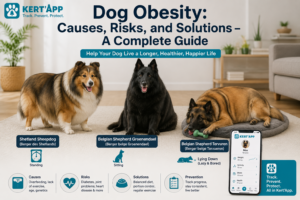
Your dog’s wagging tail greets you at the door. Their joyful energy seems limitless. But when you reach down to feel their ribs, your fingers disappear into a layer of fat. This moment, when you realize your pup might be carrying extra weight, often hits pet owners hard.
You’re not alone. In fact, nearly 65% of dogs in the United States today are either overweight or obese. It’s become so commonplace that we’ve actually forgotten what a healthy dog looks like. When most dogs around you are chunky, the overweight becomes normal. And when something feels normal, we often stop seeing it as a problem.
But here’s the thing: dog obesity is far more than a cosmetic issue. It’s a genuine health crisis affecting your dog’s lifespan, comfort, and quality of life. The good news? It’s also entirely manageable with the right approach.
This guide walks you through everything you need to know about obesity in dogs, what causes it, why it matters, and most importantly, how you can help your furry friend live a healthier, longer life.
What Exactly Is Obesity in Dogs?
Let’s start with the basics. Obesity isn’t just about a dog being chubby or having a round belly. According to veterinary professionals, obesity is defined as an excess accumulation of body fat that actually contributes to disease and compromises health.
Think of it this way: fat isn’t just stored energy sitting there harmlessly. It’s metabolically active tissue. It produces hormones, triggers inflammation, and creates a cascade of physiological changes throughout your dog’s entire body.
When your vet performs a body condition score (BCS) assessment, they’re looking at specific physical markers. A dog at ideal weight should have visible ribs when you look at them,not sticking out dramatically, but definitely noticeable. When you view your dog from above, you should see a clear waist. And from the side, their chest should dip down lower than their belly, creating that classic tucked appearance.
An overweight dog loses that waist. Their chest and belly line create an almost parallel plane with the ground. An obese dog? Their belly actually extends further than their chest does. It’s unmistakable when you see it.
The Real Causes Behind Your Dog’s Weight Gain
Understanding why your dog gained weight is actually your first step toward fixing it. Most weight problems stem from a combination of factors, not just one culprit.
Feeding Patterns and Dietary Choices
This is the elephant in the room: we’re feeding our dogs too much. And honestly, it’s easier than we realize to overfeed without even noticing.
Free-choice feeding,leaving food out all day,is one of the biggest offenders. Your dog eats whenever they want, and you never quite know how much they’ve consumed. Meanwhile, their metabolism isn’t designed for constant grazing. It’s designed for meals.
High-fat, low-fiber diets amplify the problem. These foods pack calories into smaller portions, making it easy for your dog to exceed their daily needs without feeling full. Low-fiber diets also fail to provide that satiety signal that tells your dog they’re satisfied.
Then there are the treats. Oh, the treats. Pet owners often treat their dogs with the best intentions, but treats add up shockingly fast. A typical commercial dog treat can contain 50-100 calories. Give your dog four or five throughout the day, and you’ve added 250 calories on top of their regular meals. For a 30-pound dog, that might represent 20-25% of their entire daily caloric requirement.
Table scraps seal the deal. People’s food,especially fatty table scraps,is calorie-dense and often triggers overeating behavior. Your dog learns to beg, you reward the begging with a piece of chicken, and suddenly you’ve created a daily ritual that sabotages their weight.
Lack of Physical Activity
Your dog’s ancestors were hunters. They moved constantly. Modern dogs? Many barely move at all.
We’ve created a sedentary lifestyle for our pets. They sleep all day while we work, spend the evening on the couch with us, and maybe get a 15-minute walk if we’re not too tired. That’s not nearly enough movement for most dogs.
A sedentary lifestyle doesn’t just fail to burn calories. It actually changes your dog’s metabolism. Without regular activity, their body becomes more efficient at storing energy as fat and less efficient at burning it.
Medical Conditions That Trigger Weight Gain
Sometimes, the problem isn’t entirely behavioral. Medical issues can predispose your dog to obesity or make weight loss nearly impossible without treatment.
Hypothyroidism is probably the most common culprit here. When your dog’s thyroid produces insufficient hormone, their metabolism slows dramatically. Weight gain happens despite normal eating habits. This is why any overweight dog needs a veterinary checkup,your vet might discover an underlying condition that changes everything about your approach.
Cushing’s Disease (hyperadrenocorticism) causes excessive cortisol production, leading to increased appetite and weight gain. Diabetes can also contribute to obesity, creating a frustrating cycle where the excess weight makes the diabetes worse.
Certain medications can trigger weight gain too. Some anti-anxiety medications and steroids commonly prescribed for allergies or inflammation can significantly increase appetite or slow metabolism.
Genetics and Breed Predisposition
Some dogs are just genetically prone to obesity. Labrador Retrievers are famous for this. They have genes that make them “easy keepers”,they gain weight on relatively small amounts of food.
Golden Retrievers, Cocker Spaniels, Dachshunds, Beagles, and Pugs also show higher obesity rates. This doesn’t mean these breeds are destined to be overweight, but it does mean their owners need to be more vigilant about portions and exercise.
Age and Spaying/Neutering
Older dogs metabolize calories less efficiently than young ones. Their activity levels naturally decrease. Without adjusting their food intake, weight creeps up gradually.
Spayed and neutered dogs experience metabolic changes that make weight gain more likely. Their caloric needs actually decrease by about 25-30%, but many owners don’t adjust portions accordingly.
The Health Risks Your Obese Dog Faces
This is where things get serious. Obesity in dogs isn’t a lifestyle choice or a cosmetic issue. It’s a disease that affects nearly every major organ system in your dog’s body.
Arthritis and Joint Problems
The extra weight puts constant strain on your dog’s joints. This is especially true for large breed dogs, where the pressure magnifies. That excess weight accelerates cartilage degradation, making arthritis develop earlier and progress faster.
Here’s what makes it particularly cruel: as arthritis develops, your dog exercises less because movement becomes painful. This reduced activity causes more weight gain, which worsens the arthritis. It’s a vicious cycle that many dog owners face.
Diabetes Mellitus
Obesity dramatically increases diabetes risk in dogs. Excess fat tissue interferes with insulin function, requiring the pancreas to work harder and harder. Eventually, it can’t keep up. Your once-healthy dog now requires insulin injections for life.
Respiratory Problems and Heart Disease
When a dog carries excess fat, it literally crowds their chest cavity. Their heart works harder to pump blood, and their lungs have less room to expand. Obese dogs often experience shortness of breath, especially during exercise. Their heart undergoes structural changes, weakening over time.
Research from the NIH shows that obese dogs have decreased cardiac function and impaired heart rate variability compared to lean dogs. This affects their ability to respond to stress and exercise.
Kidney Disease and Urinary Tract Issues
Obesity correlates with kidney disease development. The inflammation triggered by excess fat tissue damages the kidneys gradually. Once kidney disease develops, it’s progressive and irreversible.
Urinary tract disease also becomes more common in overweight dogs, causing recurring infections and discomfort.
Cancer Risk
This might be the scariest part: obesity increases cancer risk significantly. The inflammation created by excess fat tissue creates an environment that attracts cancer cells. Adipose tissue (fat) is filled with blood vessels that produce inflammatory cytokines. This chronic inflammation increases cancer development and progression.
And here’s the statistic that should concern every dog owner: cancer is currently the number one killer of dogs today. Extra weight isn’t just a comfort issue,it’s potentially a life-or-death factor.
Reduced Lifespan
Pull all of these factors together, and the result is clear: overweight dogs live shorter lives. Research consistently shows that overweight dogs live approximately two years less than their lean counterparts. For a dog with a 12-year lifespan, that’s a 17% reduction in time together.
An obese dog doesn’t just die earlier. They often live their final years with reduced mobility, chronic pain, and diminished quality of life.
How to Tell If Your Dog Is Actually Overweight
This is trickier than it sounds. Many dog owners genuinely don’t realize their dog is overweight because we’ve normalized the chubby dog. Media representations of dogs have shifted toward the heavier end of the spectrum, making our perception unreliable.
The most accurate method? Feel their ribs. Get your hands on your dog’s chest just behind their front legs and apply moderate pressure. You should be able to feel the individual ribs easily without pressing hard. If you feel a thick layer of fat over the ribs, your dog is overweight.
From above, your dog should have a visible waist,a narrowing between their ribs and hips. If they look barrel-shaped when viewed from above, they’re carrying excess weight.
From the side, your dog should have a tucked abdomen. The chest should dip lower than the belly, creating that classic athletic profile. If the chest and belly create a straight line, weight loss is needed.
Behavior can also indicate excess weight. Does your dog tire easily on walks? Do they pant excessively? Do they avoid playing with other dogs? These behavioral changes often signal that weight is compromising their comfort.
When in doubt, ask your veterinarian. They can provide a professional body condition score and give you honest feedback about your dog’s weight status. Most dogs benefit from this kind of assessment at least annually.
Solutions: How to Help Your Obese Dog Lose Weight Safely
The good news is that dog obesity is completely reversible. Thousands of dogs lose weight successfully every year. The key is understanding the approach and committing to it consistently.
Start With Your Veterinarian
Before changing anything, schedule an appointment with your vet. They need to rule out medical conditions like hypothyroidism or Cushing’s disease that could be contributing to weight gain. They also need to assess your dog’s overall health to determine if weight loss is safe and how fast it should happen.
Your vet might recommend bloodwork to establish a baseline. They can prescribe a therapeutic weight-loss diet if needed,these are specifically formulated to support fat loss while preserving muscle mass and providing essential nutrients.
Focus on Diet: Where Most Weight Loss Happens
Here’s an uncomfortable truth that veterinarians emphasize: weight loss is 60-70% diet and only 30-40% exercise. Diet is where the real work happens.
Measure everything. Stop estimating portions. Use an actual measuring cup or food scale. Most dog owners unknowingly overfeed by 25-50% because they eyeball portions. Measuring removes the guesswork.
Choose the right food. Your regular kibble might not be ideal for weight loss. Therapeutic weight-loss diets are specifically designed to be lower in calories while remaining nutritionally complete. They’re typically higher in fiber, which promotes satiety without adding calories. Fiber makes your dog feel fuller longer, reducing hunger-driven begging.
These prescription diets also preserve muscle mass during weight loss, which is crucial. You want your dog losing fat, not muscle. Regular calorie restriction without proper nutrition causes muscle loss, which slows metabolism and makes the problem worse.
Limit treats dramatically. Treats should comprise no more than 10% of your dog’s daily caloric intake. If your dog needs 1,000 calories daily, only 100 should come from treats. That’s roughly one standard dog treat or a small handful of tiny training treats.
Consider using dog-safe vegetables as treats instead. Carrots, green beans, and broccoli are extremely low in calories, high in fiber, and genuinely good for your dog. Many dogs love them once they develop a taste.
Eliminate table scraps completely. This is non-negotiable. Table scraps are calorie-dense and portion-creep in disguise. That small piece of chicken is 50 calories. The bit of cheese is 30 calories. The slice of toast is 40 calories. You’ve just added 120 calories without thinking about it.
Split meals into smaller portions. Instead of one large meal, split your dog’s daily food into three smaller meals. This keeps hunger at bay throughout the day and prevents your dog from begging between meals.
Adjust portions gradually. Aim for weight loss of one to two percent of body weight per week. This sounds slow, but it’s the safe, sustainable rate. A 50-pound dog losing one percent weekly loses a pound per week,or about 4-5 pounds monthly. That’s a massive improvement in just a few months.
For most dogs, this means reducing calories by 10-20% from their maintenance level. Your vet can help calculate the exact target for your specific dog.
Increase Exercise Gradually
Once your dog is on a reduced-calorie diet, add exercise. Start conservatively, especially if your dog is significantly overweight or older.
Daily walks matter. Aim for at least 30 minutes of walking daily. Start with what your dog can currently handle, then gradually increase. If your dog currently gets a 10-minute walk, don’t jump to 30 minutes immediately. Increase by 5-minute increments every few days.
Walk at a pace that gets your dog’s heart rate up but doesn’t cause excessive panting or exhaustion. You’re looking for sustainable, regular exercise,not a one-time burst of activity.
Add playtime. Fetch, tug-of-war, and interactive games burn calories while keeping things fun. Many dogs enjoy these activities more than formal walks. If your dog loves swimming, that’s fantastic,water exercise is perfect for overweight dogs because it reduces joint stress.
Consider structured activities. Some dogs thrive with agility training, dock diving, or other dog sports. These provide regular, engaging exercise that keeps both you and your dog motivated.
Monitor for pain or breathing issues. Especially early in the weight-loss journey, watch carefully for signs that your dog is uncomfortable. Limping, excessive panting, or reluctance to continue suggests you need to scale back intensity or duration.
Use Supplements for Metabolic Support
Certain supplements can support weight loss by enhancing fat metabolism. L-carnitine, an amino acid, helps your dog’s body metabolize fats more efficiently. It’s particularly useful when combined with exercise.
B vitamins also support healthy metabolism. Some prescription weight-loss diets include these, but your vet might recommend them separately too.
These supplements don’t cause weight loss alone, but they optimize the process when combined with diet and exercise.
Track Progress and Adjust
Schedule regular weigh-ins,typically every 2-4 weeks. Track your dog’s body condition score alongside their weight. Sometimes a dog’s weight plateaus but their body condition continues improving (they’re gaining muscle while losing fat). This is actually a good sign.
Keep a food journal. Write down everything your dog eats and drinks. This creates accountability and helps you spot calorie creep before it becomes a problem.
If progress stalls for more than 4-6 weeks, talk to your vet. You might need to adjust caloric intake further, or your vet might discover a medical issue that requires treatment.
Be Patient and Consistent
This is perhaps the most important part: weight loss takes time. The same gradual weight gain that took years to develop takes months to reverse. This frustrates many people, but the tortoise-and-hare principle applies here. Rapid weight loss often leads to failure and regain.
The dogs that successfully lose weight are the ones whose owners treat it as a permanent lifestyle change, not a temporary diet. You’re not “going on a diet”,you’re establishing new, healthier feeding and exercise habits that persist for life.
FAQ
Can’t I just exercise my dog more without changing their diet?
Exercise helps tremendously, but diet is where the real work happens. Many people are shocked to discover that 30 minutes of walking burns fewer calories than they’d expect. A 50-pound dog might burn only 150-200 calories during a 30-minute walk, yet their owner might add 300 calories through treats without thinking. Exercise is essential for health and metabolism, but caloric restriction drives weight loss.
How quickly should my dog lose weight?
Aim for 1-2% of body weight per week. This might seem slow, but it’s sustainable and safe. Rapid weight loss can cause muscle loss, nutritional deficiencies, and metabolic issues that sabotage long-term success.
Are prescription weight-loss diets worth the cost?
Yes, if your dog needs substantial caloric restriction. These diets are formulated to preserve muscle mass while reducing calories,something regular kibble won’t do. They’re also typically high in fiber, which keeps your dog feeling full. If cost is an issue, talk to your vet about alternatives or payment plans.
What if my dog refuses the new diet?
Some transition resistance is normal. Mix the new food with the old gradually, increasing the proportion of new food over 7-10 days. Most dogs accept it once they adjust. If your dog truly refuses a therapeutic diet, discuss alternatives with your vet.
Can I just feed my dog less of their regular food?
You can, but it’s not ideal. Regular kibble cut down to weight-loss portion sizes leaves your dog hungry and frustrated. They feel like they’re being punished. Therapeutic diets are more satisfying at lower caloric levels because of the fiber and nutrient density. If you must use regular food due to cost, add low-calorie vegetables to bulk up portions.
How do I handle other family members who give my dog treats?
Communication is key. Explain the health stakes to everyone in your household. If your dog dies of heart disease at age 9 instead of 12, someone who “just wanted to make them happy” will feel terrible. Make it a family commitment. Consider giving everyone a daily treat allowance for your dog,tell them they have 10 treats per day to dole out, making each one count.
Can my dog have any treats at all?
Yes. Treats comprise up to 10% of daily calories, and they serve an important purpose,they maintain the human-dog bond and support training. Choose low-calorie options: small pieces of carrot, single green beans, or low-calorie commercial treats designed for weight management.
What if weight loss isn’t happening?
First, rule out medical issues with your vet. If your dog is healthy and still not losing weight, you’re likely underestimating caloric intake. Track everything for a week,every kibble, treat, and snack. Most owners discover they’re feeding more than they thought. Also ensure your dog isn’t getting food from other sources (kids’ leftovers, table scraps, etc.).
Key Takeaways
Obesity in dogs is a disease, not just a cosmetic issue. Nearly 65% of American dogs are overweight or obese, creating a health crisis that shortens lifespans and diminishes quality of life.
The causes are multifactorial: overfeeding, lack of exercise, genetic predisposition, medical conditions, and the normalization of overweight dogs in our society all play roles.
The health risks are serious: arthritis, diabetes, heart disease, kidney disease, respiratory problems, cancer risk, and a reduced lifespan of approximately two years.
Weight loss is achievable: Combine dietary caloric restriction (60-70% of the equation), regular exercise, and veterinary guidance. Aim for gradual weight loss of 1-2% of body weight weekly.
It’s a lifestyle change: Successful weight loss isn’t temporary dieting. It’s establishing new feeding and exercise habits that persist for the rest of your dog’s life.
Measurement and tracking matter: Use food scales, track progress regularly, and adjust based on results. What works for one dog might need tweaking for another.
Conclusion: Your Dog’s Second Chance
That’s what this is really about: giving your dog more time with you.
Every extra year, every extra walk, every extra tail-wag at the door, it starts with one decision you make today, not someday.
You don’t have to guess your way through it. Thousands of dog owners are already using KertApp to track their dog’s weight, log vet visits, and get reminders that keep the plan on track, so nothing falls through the cracks between now and those extra years.
Your dog can’t start this journey without you. So, what are you waiting for?
Start tracking your dog’s weight loss journey with KertApp today. It takes less than a minute to set up, and it might be the minute that adds years to your dog’s life.