
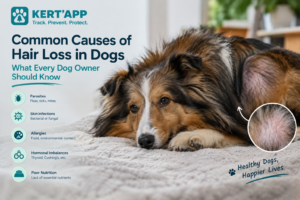
Hair loss in dogs also called alopecia doesn’t just happen randomly. It stems from parasites, allergies, infections, or hormonal problems. Some cases resolve quickly while others need ongoing management. The key? Getting a vet diagnosis matters because treatment depends entirely on what’s causing it.
What’s Actually Going On With Your Dog’s Hair?
First, let’s be clear about something: not all hair loss is the same.
Your dog sheds. A lot. That’s normal. I’m talking about the fur you vacuum up constantly, the tumbleweeds of hair blowing across your floor, the stuff that gets on your clothes no matter how much you brush. That’s just what dogs do. Their coat cycles through growth phases, then the old hair falls out and new stuff grows back. It’s nature.
But alopecia? That’s different. That’s when your dog’s skin actually shows through. You see actual bald patches. The hair isn’t growing back. There’s inflammation, maybe redness, possibly some crusty stuff or even discharge. That’s when you know something medical is actually happening.
The thing is, alopecia can hit any dog at any time. Puppies, senior dogs, mutts, purebreds, nobody’s immune. And the causes range from “really annoying but fixable” to “this needs long-term management.”
The Real Culprits: Why Your Dog’s Actually Losing Hair
Let me break down the actual causes that are driving hair loss. I’m going to start with the most common ones because odds are good your dog’s hair loss falls into one of these buckets.
Parasites Are Probably Your Number One Enemy
If I had to bet money on what’s causing your dog’s hair loss, I’d put it on parasites. Specifically, fleas.
Here’s why fleas suck so much (literally): one single flea can trigger a meltdown. Your dog gets bitten, starts scratching like crazy, and if they’re sensitive, which many dogs are, they develop something called flea allergy dermatitis. That means they’re not just reacting to the bite itself. They’re having an actual allergic reaction to the flea’s saliva. And that allergic reaction? It causes itching so intense that your dog scratches until they bleed. The skin gets raw. Hair falls out. Scabs form. It’s a mess.
The kicker is that you might not even see the fleas. One flea bite is enough to trigger the whole cascade. You’re looking at your dog thinking “I don’t see any fleas” while your dog’s having a full-blown skin crisis.
Mites are sneakier still. There are two types that cause most of the problems:
Demodex mites live on your dog’s skin naturally. They’re supposed to be there in small numbers. But when your dog’s immune system gets weak whether from stress, illness, age, or just genetics these mites overgrow. Puppies and senior dogs are especially vulnerable. The result? Patchy hair loss, crusty skin, sometimes a greasy or musty smell.
Sarcoptic mites are different. These are contagious. Dog to dog, sometimes even to humans. They burrow into the skin and the itching is absolutely relentless. Your dog will scratch until they bleed. This one needs attention fast.
Ticks can cause localized hair loss too, but they’re less of a culprit than fleas or mites. Still, if you see a tick area and hair’s falling out there, that’s probably the reason.
Here’s the reality check nobody wants to hear: year-round dog parasite prevention isn’t marketing hype. It’s actually essential. Skipping it “just for winter” is literally how you end up with an infestation. If you have pets, you need year-round prevention. Period.
Skin Infections Will Wreck Your Dog’s Coat
When bacteria or fungus decides to colonize your dog’s skin, the hair follicles pay the price.
Ringworm is probably the one you’ve heard horror stories about. And yeah, it sounds terrifying. But here’s the truth: it’s just a fungus. Not worms at all. Confusing name, I know.
Ringworm creates these circular patches of hair loss. Usually the center’s crusty and scaly looking. It spreads to other pets. Sometimes it gets on humans. So yeah, catching it fast matters.
Most commonly though? Bacterial infections. These usually show up after something else damages the skin. Your dog had allergies and scratched constantly. Their skin broke down. Then bacteria moved in and made everything worse. We call these secondary infections, and they’re super common.
Then there’s yeast. Malassezia yeast loves warm, moist environments. Dogs with floppy ears or skin folds get it constantly. The skin gets greasy, smells kinda funky, itches like crazy, and hair falls out.
Here’s what matters: if your dog has crusty patches, scaly skin, or an odd smell going on, get a culture test done. Seriously. Knowing exactly what you’re dealing with changes everything about treatment. It’s not a luxury, it’s how you actually fix the problem.
Allergies Are The Sneaky Culprit
Allergies catch people off guard because they don’t show up as a single symptom. They’re subtle and they stick around.
Environmental allergies are when your dog’s immune system freaks out over pollen, dust mites, mold, or whatever’s floating around outside. Their skin gets inflamed. The itching drives them absolutely crazy. They scratch until they bleed. Hair falls out. Infections move in because of the open wounds.
If your dog’s hair loss happens spring through fall and improves in winter, environmental allergies are your culprit. Seasonal patterns are a dead giveaway.
Food allergies work differently. Your dog’s system reacts to something they’re eating chicken, beef, wheat, dairy, whatever. Unlike environmental allergies, food allergies can happen year-round. And here’s the weird part: the itching usually shows up on the face, paws, and belly.
The frustrating thing about food allergies? There’s no quick blood test that definitively tells you what your dog’s allergic to. Your vet does an elimination diet trial. You feed your dog a limited-ingredient or hypoallergenic food for like 6-12 weeks. Then you slowly introduce foods back one at a time to see what triggers the problem. It takes forever. But it works.
And here’s the thing about allergy management: you’re not curing it. You’re managing it. Long-term. Sometimes for life. That means preventing exposure when you can, treating symptoms with medication, and probably changing your dog’s diet. It’s not a one-and-done fix, but it’s manageable.
Hormonal Imbalances Affect Hair From The Inside Out
Your dog’s hormones control basically everything including whether their hair stays in or falls out.
Hypothyroidism is when the thyroid doesn’t make enough hormone. Hair gets thin and brittle. It falls out in patches. The skin becomes dark and flaky. These dogs also gain weight, feel sluggish, and act like they’re always cold. Blood tests confirm it. Thyroid medication (levothyroxine) usually fixes it. Just one pill a day and boom, problem solved.
Cushing’s disease is the opposite problem. Too much cortisol in the bloodstream. Hair thins symmetrically on both sides of the body. The skin gets thin and fragile, bruises easily, sometimes gets dark spots. These dogs drink like crazy and pee constantly. It’s a hormonal mess.
Sex hormone stuff can trigger hair loss too. Pregnancy and lactation cause hormone spikes that can trigger temporary alopecia. Spayed or neutered dogs sometimes develop hormone-related hair loss years later if levels shift.
The good news? Hormonal causes require blood tests to confirm, but once you nail the diagnosis, treatment is usually straightforward and your dog can go back to normal.
Stress and Anxiety Manifest As Over-Grooming
Dogs experience stress just like we do. And their bodies show it in weird ways.
Some dogs develop behavioral alopecia from anxiety or stress. They lick, chew, and groom excessively in response to nervousness, boredom, or just general anxiety. Separation anxiety, loud noises, changes in the household these trigger the behavior.
Here’s the trick: the stress itself doesn’t directly cause hair loss. The obsessive licking and chewing does. Your dog licks the same spot over and over until hair falls out and skin gets damaged. Sometimes secondary infections move in because now there’s open skin for bacteria to colonize.
Treating behavioral hair loss means dealing with the anxiety. That might mean anti-anxiety meds, working with a trainer, more exercise, enrichment activities, maybe even an e-collar while you sort out the root cause.
Other Causes That Show Up Less Often But Still Matter
Beyond these five heavy hitters, there are other reasons your dog might be losing hair:
Nutritional deficiencies from a poor diet or starvation mess with hair quality and growth. Protein, zinc, vitamin E, biotin, vitamin A, iron these all matter for a healthy coat. That’s why knowing how much to feed your dog and providing quality nutrition is so important. Poor diet directly impacts coat health.
Autoimmune diseases like pemphigus or lupus attack the body’s own tissues, including hair follicles. Rare but serious.
Breed predisposition is real. Certain breeds just inherit higher risks for certain types of alopecia. German Shepherds, Chow Chows, Siberian Huskies, Alaskan Malamutes, “bully” breeds they all have higher predispositions.
Friction and rubbing from tight collars, harnesses, or clothing causes localized hair loss. That’s why proper-fitting gear actually matters.
Chemical exposure or burns damage hair follicles. Could be actual chemicals, extreme heat, or even friction burns.
Medication side effects from chemotherapy or certain steroids can trigger temporary hair loss.
Skin cancer is rare but possible. Any unusual growth or persistent sore needs investigation.
How To Actually Tell If Your Dog Has Alopecia
Hair loss doesn’t always look the same way. Here’s what to watch for:
- Bald patches or thinning that shows skin underneath
- Reddened, inflamed, or discolored skin
- Scabs, crusts, or discharge from the area
- Your dog constantly scratching, licking, or chewing
- Hair that looks thin and brittle
- Darkened skin (hyperpigmentation)
- Bleeding or oozing from the area
Some cases have zero itching. Other cases involve your dog scratching constantly. Pay attention to the pattern. Is it spreading? Is it symmetrical (both sides of the body)? Does it itch? These details help your vet actually figure out what’s happening.
If you notice unusual hair loss especially if it’s spreading or if your dog seems uncomfortable that’s your signal to call the vet. Don’t wait weeks hoping it goes away on its own.
How Vets Actually Diagnose This Stuff
Getting to the root cause takes detective work. Your vet isn’t just guessing.
First, they ask questions. When did you first notice the hair loss? Is your dog itchy? Are other pets affected? Has your dog had any environmental exposures? What’s their breed? Age? What are you feeding them? Are they on parasite prevention? Have there been any major life changes? This background matters because it narrows down the possibilities.
Then they do a physical exam. They look closely at the bald areas. They check for patterns, inflammation, parasites, secondary infections. They feel the skin. They look at hair under magnification.
Then comes the testing. This is where you get real answers:
- Hair and skin samples examined under a microscope to spot abnormalities
- Skin scrapings to look for mites
- Fungal cultures to identify ringworm
- Bacterial cultures to catch secondary infections
- A black light exam (Wood’s lamp) to spot some types of ringworm
- Skin tape preps to look for bacteria and yeast
- Skin biopsy when autoimmune disease or cancer is suspected
- Blood tests to check thyroid levels and cortisol
- Skin testing for allergies (pricey but thorough)
- An elimination diet trial for suspected food allergies
Some tests give instant answers. Others take days or weeks through the lab. Your vet might need multiple tests to nail it down. That’s normal. That’s how you actually get the right diagnosis.
Treatment Actually Depends On Getting The Diagnosis Right
Here’s the reality: successful treatment depends entirely on knowing what’s actually causing the hair loss.
Quick Relief While You Figure It Out
Before you have a diagnosis, your vet can offer some comfort:
- Medicated shampoos with soothing ingredients reduce itching and control secondary infections
- Anti-itch sprays and topical treatments provide quick relief
- Oral antihistamines sometimes help (though honestly they’re not amazing for most dogs)
- An e-collar (cone collar) prevents further damage from licking and scratching
These aren’t cures. They’re making your dog comfortable while you figure out what’s actually wrong.
Long-Term Treatment Plans
Once you know the cause, treatment gets specific:
For parasites: Year-round flea and tick prevention (topical, oral, or injection). Mite treatments usually take several weeks of medication or medicated dips.
For bacterial or fungal infections: Antibiotics or antifungals for several weeks. Sometimes you need multiple courses if secondary infections keep coming back.
For allergies: Environmental allergies might need antihistamines, steroids, immunotherapy, or newer medications. Food allergies require that elimination diet plus a restricted-ingredient diet long-term. It’s not quick, but it works.
For hormonal issues: Thyroid medication is straightforward one daily pill. Cushing’s disease needs trilostane or mitotane with regular monitoring.
For stress-related alopecia: Anti-anxiety meds, behavioral training, more exercise, enrichment activities.
Recovery timelines vary wildly. Superficial skin infections clear in 1-2 weeks with proper treatment. Deep infections take weeks or months. Some conditions need lifelong management. You’re not curing them, you’re controlling them.
Prevention Is Way Easier Than Treatment
This is worth saying twice: preventing hair loss beats treating it every single time.
Year-round parasite prevention, quality nutrition, regular vet checkups, stress management, a clean environment these all reduce your risk massively. Catching problems early (before they become massive infections) makes treatment cheaper and easier.
If your dog’s already dealing with weight issues alongside hair loss, that compounds the problem. Dogs that are overweight often develop skin conditions because their compromised health makes them vulnerable to infections and allergies. So maintaining healthy weight through proper feeding and exercise is part of preventing hair loss too.
Don’t skip preventive care. Don’t cut corners on parasite prevention. Don’t assume your dog’s fine because they look fine. Regular checkups and preventive care actually save you money and keep your dog healthier.
What You Actually Need To Remember
- Hair loss in dogs has tons of causes parasites, allergies, infections, hormones, and stress are the top five
- Not all hair loss is an emergency, but any unusual pattern deserves a vet checkup
- Diagnosis takes time and sometimes multiple tests, but that’s how you actually get it right
- Most cases aren’t life-threatening and respond well to proper treatment
- Prevention through parasite control, quality diet, and regular checkups is your best defense
- Once you know the cause, treatment becomes way more effective
FAQ
When should I actually worry about hair loss in my dog?
Any unusual hair loss warrants a vet visit. If it’s spreading, if your dog is itchy, or if it lasts more than a few weeks, don’t wait. Small patches that aren’t bothering your dog might resolve on their own, but getting checked is always the safe call. There’s no penalty for being cautious.
Can stress actually cause hair loss in dogs?
Yeah, it can. Stress and anxiety trigger excessive licking and grooming, which causes hair to fall out. It’s behavioral rather than a direct physiological cause, but the result is the same missing patches of hair. If your dog’s going through changes (new house, new pets, schedule changes), this could be it.
What’s actually the difference between alopecia and normal shedding?
Shedding is a natural cycle where old hair falls out and new hair grows in its place. It’s normal and happens year-round. Alopecia creates visible bald patches, thinning, or exposed skin and results from an underlying medical problem. If you can see skin where there should be fur, that’s alopecia.
How long does it take for dog hair to grow back?
Recovery depends entirely on the cause. Superficial infections might see regrowth within 6-8 weeks. Hormonal conditions might take 3-6 months. Some permanent cases never regrow fully. Your vet can tell you the timeline for your specific situation.
Are some dog breeds actually more prone to hair loss?
Absolutely. German Shepherds, Chow Chows, Siberian Huskies, Alaskan Malamutes, and “bully” breeds show higher predisposition to certain types of alopecia. If you have one of these breeds, talk to your vet about breed-specific risks. Some conditions are just built-in.
What home remedies actually help with dog hair loss?
Medicated shampoos and topical treatments can help take the edge off. But honestly? Home remedies alone won’t solve most cases. Over-the-counter products might even mess with your vet’s ability to diagnose, so avoid using anything before your appointment. Real treatment targets the actual cause, not just symptoms.
Will my dog’s hair actually grow back after alopecia?
In many cases, yes especially with temporary conditions or allergy-related alopecia. But in some cases (certain breed-specific conditions or advanced skin damage), hair might not fully regrow. Your vet can tell you the prognosis for your specific situation. Ask them directly about what recovery looks like for your dog.
Here’s What You Actually Need To Do Right Now
Look, if you’re reading this because your dog’s losing hair, here’s your actual game plan:
First: Schedule a vet appointment soon. Most cases aren’t emergencies, but getting checked matters. Don’t put this off thinking it might resolve on its own. It might, but you won’t know until a vet looks at it.
Second: Document what you’re seeing. Take photos. Note when it started. Is it spreading? Is your dog itchy? These details matter for diagnosis. Consider using a pet health tracking app to document symptoms, timeline, and patterns. Having organized records actually helps your vet diagnose faster.
Third: Write down your dog’s history. Diet, parasite prevention, recent changes, any health issues. Have this ready for your appointment. If your dog’s been on any medications or supplements, list those too.
Fourth: Trust the diagnostic process. Your vet might run multiple tests. That’s normal. That’s how you get the right diagnosis. Getting the diagnosis right determines whether treatment works.
Fifth: Follow the treatment plan exactly. Consistency matters. Don’t skip doses. Don’t stop early just because your dog looks better. Most alopecia requires commitment to actually work.
Use appointment reminders: Once you schedule your vet visit, set up appointment reminders so you don’t accidentally miss it. Follow-up appointments matter too, especially for long-term conditions. Missing checkups delays recovery and can make things worse.
Conclusion: Your Dog Needs You To Act
Here’s the honest truth: most cases of alopecia in dogs are manageable. With proper diagnosis and treatment, your pup’s coat can bounce back. The key is catching it early and getting real help.
Your dog’s health is worth the effort. Get that appointment scheduled today. Don’t wait another week hoping things improve on their own. Don’t assume it’s nothing serious because your dog “looks fine otherwise.” Hair loss is your dog’s way of telling you something’s wrong even if it’s just frustrating and not life-threatening.
The difference between a quick recovery and months of struggle often comes down to this: did you take action fast enough? Did you actually follow through with diagnosis and treatment? Or did you wait, hoping it would go away on its own?
Your dog’s depending on you to figure this out. Make the call. Schedule the appointment. Get answers. Then commit to the treatment plan, whatever it is.
Your pup’s gorgeous coat is waiting on the other side of proper care. Let’s make it happen.