
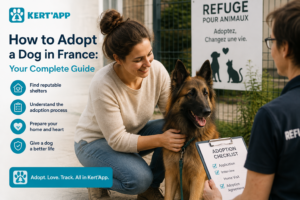
So you’re thinking about how to adopt a dog in France. Maybe you just moved here and your apartment feels a little too quiet. Maybe you’ve lived in Paris for years and finally decided this is the year. Or maybe , and this happens more than you’d think , you fell for a street dog while on holiday and now you can’t stop thinking about it. Whatever brought you here, you’re in the right place, and honestly, it’s a lot more doable than it sounds.
Here’s the honest version: adopting a dog in France isn’t complicated, but it is different from what you might be used to back home. There’s paperwork, there’s a process, and there’s a system that takes its time on purpose. Once you get the hang of it, though, it moves pretty smoothly. And once your dog is home, keeping track of vaccinations, weight, and vet visits gets a lot easier with a proper pet health tracker app instead of a pile of paper folders.
This guide walks through the whole thing , finding your match, the paperwork, the costs, the breed rules, and what to do once you’re actually home with your new best friend.
Understanding the French Dog Adoption System
Before getting into the details, it helps to know how adoption actually works here. It’s not mysterious, just organized a bit differently than in the US or UK. The backbone of it all is the SPA (Société Protectrice des Animaux) , think of it as France’s version of the ASPCA or Battersea. It’s been around since 1845, so they’ve had some time to figure out what works, and they run shelters all over the country. If you’re the type who likes to stay ahead of appointments and reminders once your dog’s settled in, a good vet appointment reminder system saves a lot of last-minute scrambling.
The SPA isn’t the only game in town, though. France is full of smaller rescues, breed-specific groups, and community shelters, some tucked away in rural areas and others running out of city storefronts. The adoption process is designed to protect both you and the dog , organizations will ask questions, check your living situation, and sometimes visit your home. It can feel thorough, even a bit much at times, but it works: return rates here are noticeably lower than in a lot of other countries. Most adoptions take two to six weeks to finish, which feels like forever when you’re excited, but the wait is worth it.
Step-by-Step: What Actually Happens When You Adopt
Let’s walk through what really happens once you decide to go for it.
Step 1: Prepare your home (and yourself). Before you even walk into a shelter, be honest with yourself. Is your space right for a dog? Are you home enough? Can you handle vet bills and the occasional surprise expense? If you rent, check your lease now, not after you’ve already fallen for a dog you can’t legally keep.
Step 2: Visit shelters and rescues. This is the fun part. The SPA has locations across Paris, Lyon, Marseille, Toulouse, and beyond, so if you’re searching “dog adoption near me France,” this is where you’ll land. Take your time , spend real minutes with different dogs, ask staff about temperament, and don’t rush a decision that’s going to shape the next ten-plus years.
Step 3: Find your match. Once you’ve clicked with a dog, the shelter will usually dig into your situation , living space, experience, how much time you’re home, other pets or kids. They’re not being nosy; they’re matching you properly. Dogs with rougher backgrounds sometimes come with a trial period or a training commitment, which is actually a good sign that the organization cares.
Step 4: Fill out the adoption application. This is where the paperwork starts. Expect to hand over personal details, proof of residence, employment or income info, and sometimes a vet reference if you’ve had dogs before. Renters may need written landlord permission too.
Step 5: The home visit (sometimes). Depending on the dog and the organization, someone might stop by your place. It’s not an inspection for perfection , they just want to confirm there’s a safe spot for the dog to sleep and nothing obviously risky around. Smaller rescues tend to do this more often than the bigger SPA branches, mostly because they have fewer cases to manage.
Step 6: Finalize and get your documents. Once approved, you’ll sign the adoption contract and get the dog’s health records , vaccinations, microchip number, any medical notes. Register that microchip in your name immediately; it’s genuinely one of the most important steps in this whole process, and it’s much easier to stay on top of if you’re already using something like a pet health tracker to keep everything in one place from day one.
Step 7: Bring your dog home. This is where the real adventure starts. Set up a quiet, safe space with food, water, and bedding, and let your dog adjust at their own pace , skip the “welcome home” party on day one, no matter how tempting. It usually takes two to four weeks for a rescue dog to fully relax and show their real personality. Some settle in days, others take months. Both are completely normal.
What Documents Do You Actually Need?
France does love its paperwork, so let’s get into it.
Proof of residence. A recent utility bill, rental agreement, or property deed with your name and address, ideally from the last three months.
Identification. A valid passport works fine if you’re not French; otherwise your national ID card.
Proof of income or employment. Recent payslips, an employer contract, self-employment proof, or a pension statement if you’re retired. They just want reassurance you can cover vet bills, which , fair enough , aren’t cheap.
Veterinary references. If you’ve owned dogs before, some shelters will contact your previous vet. First-time owners usually get this waived, sometimes swapped for personal references.
Landlord permission. If you rent, get this in writing before you fall for a dog. Some landlords are relaxed about pets, some really aren’t, and your lease might already say more than you think.
The adoption certificate. Your official proof of ownership once everything’s signed. Keep it somewhere safe, alongside your dog’s microchip documentation.
One thing people genuinely overlook: registering the microchip. Every dog adopted in France is chipped by law, but if that chip isn’t registered to you through I-CAD (the national pet identification database), a shelter or vet won’t be able to reach you if your dog ever goes missing. It’s a five-minute task that matters enormously , and it’s one of those health-record details worth logging properly, the same way you’d track your pet’s weight and health changes over time instead of trying to remember it all.
Can Foreigners Adopt a Dog in France?
Yes, absolutely. But there are a few extra hoops depending on where you’re from.
EU/EEA citizens with legal residency, even temporary, rarely run into trouble. You might need to show a visa or residency permit, but otherwise the process is identical to a French national’s.
US, UK, and other non-EU citizens face a bit more scrutiny. You’ll likely need to prove you’re legally in France , a long-stay visa, a work contract, student enrollment, or in some cases a visitor visa, though that last one makes a few organizations hesitant. They just want reassurance you’re not leaving in two weeks with a dog in tow.
Language rarely turns into a real barrier. Staff at the SPA and most bigger rescues speak English, especially in Paris and other major cities. Smaller-town operations might need a French-speaking friend along, but it’s manageable. And yes, some smaller rescues have been burned before by foreigners who adopted and then left the country, so expect a few more questions about your long-term plans. It happens constantly, though , thousands of foreigners adopt here every year, and organizations know exactly how to handle it.
How Much Does It Cost to Adopt a Dog in France?
Let’s talk numbers, because this matters.
The SPA typically charges €100–€300 depending on the dog’s age, while smaller shelters might ask €50–€150, and breed-specific rescues sometimes go up to €400. That fee usually covers a vet health check, mandatory microchipping, first vaccinations, deworming, and often spaying or neutering , so you’re really paying for vet work that’s already done, which is decent value.
What people underestimate is everything that comes after. Budget roughly €200–€400 for extra vet care in the first weeks, €360–€720 a year for decent food, €100–€200 for basic supplies like a bed and leash, and maybe €200–€500 if you go for training classes. Pet insurance runs about €10–€30 a month, and it’s worth having some emergency vet fund on top of all that. Knowing what health information insurers actually ask for ahead of time saves a lot of stress if you ever need to file a claim. All in, most people land somewhere between €1,500 and €2,500 in that first year, dropping to €1,000–€1,500 annually after that.
For comparison, buying from a breeder often runs €800–€2,500+, with none of the vet work included. Adoption is cheaper, and you’re saving a life on top of it.
Breed Restrictions and Dog Adoption Laws in France
This one catches people off guard. France sorts certain breeds into two restricted categories. Category 1 covers dogs bred or associated with fighting , American Staffordshire Terriers, certain Mastiffs, Tosas, and lookalikes , and these are essentially banned; shelters won’t adopt them out. Category 2 includes breeds like American Pit Bull Terriers, Rottweilers, Dogo Argentinos, and Boerboels, which require special authorization, a muzzle in public, liability insurance, and specific training. Adopting one is possible, but it means extra paperwork with your local prefecture and a fair bit of patience.
These rules came out of real incidents over the years, and whatever you think of them, shelters follow them strictly. The good news is there’s still an enormous range of dogs available outside these categories , mixed breeds, Labradors, Border Collies, Corgis, Beagles, German Shepherds, and plenty more. If you want something specific, search “rescue [breed name] France” and you’ll usually find a dedicated group.
Is France Dog-Friendly for Apartment Living?
Yes, genuinely. But a few things matter. Check your lease for pet clauses first , some landlords are fine with dogs, others restrict by size or breed, and ignoring the clause can lead to eviction, which is bad for everyone involved, especially the dog.
Space-wise, you don’t need much , just a corner where your dog can settle comfortably. Exercise matters more; French cities are extremely walkable, which genuinely helps tire out a dog through daily neighborhood walks. Be honest about noise too , barking in an apartment isn’t fun for anyone, and shelters can steer you toward a calmer dog if that’s a concern. And if muddy paws or the odd accident on the rug become a thing, it’s worth having a few natural ways to remove pet stains bookmarked before you need them. Paris especially is dog-friendly: cafés, park zones in the Bois de Boulogne and Bois de Vincennes, even some restaurant patios welcome them. Lyon, Toulouse, Marseille, and Bordeaux aren’t far behind.
Adopting on a Visa: What Changes
If you’re on a tourist or Schengen visa, expect more hesitation from adoption organizations, they’re wary of dogs being abandoned if you leave. A long-stay visa or carte de séjour makes things far easier, since it signals you’re staying. Student visas work fine, though you might get asked about post-graduation plans. Work visas are usually the smoothest, since stable employment and legal residency check every box. EU citizens post-Brexit rarely hit friction either way.
SPA vs. Private Shelters: Which Should You Choose?
The SPA gives you a bigger selection and standardized, professional procedures, usually at a slightly lower fee , though it can feel a bit impersonal given the volume. Private shelters and rescues, on the other hand, tend to know each dog’s personality in real depth and offer more support after adoption, though the selection is smaller and hours can be limited. Honestly, if you want to browse widely, start with the SPA; if you want a more personal match, a private rescue is often the better fit. Plenty of people check out both before deciding.
How Long Does the Whole Process Take?
Roughly two to four weeks on average: about a week from application to your first meeting, another one to two weeks for the compatibility check and possible home visit, and a few more days for paperwork. Fast cases wrap up in ten days; slower ones with bureaucratic delays can stretch to six or eight weeks. Don’t push the shelter to hurry , a careful process now usually means a much smoother adoption later. While you wait, it’s a good time to browse a few more pet care guides so you’re not scrambling to learn the basics the week your dog actually arrives.
After You Bring Your Dog Home
Within the first 48 hours, book a check-up with your own vet, even if the shelter already did one , it establishes your dog’s ongoing care record. Within the first week, confirm the microchip is properly registered in your name and write the number down somewhere safe. Within two weeks, seriously consider pet liability insurance; it’s cheap in France and covers accidents your dog might cause. In the first month, start training, whether that’s a professional class or consistent house rules , rescue dogs especially need clarity on what’s expected. And going forward, keep up with yearly vet visits, more often if you’ve got a puppy or senior dog , a solid veterinary reminder system makes this a lot easier to stay on top of than relying on memory.
If you ever plan on hiring a pet sitter down the line, it’s worth knowing what to actually ask a sitter reference before trusting them with your newly adopted dog. A little vetting goes a long way for everyone’s peace of mind.
Your Dog Adoption Checklist
Before you head to a shelter, make sure you have:
- Proof of residence (recent utility bill or rental agreement)
- Valid ID (passport or national card)
- Income documentation (payslips or employment letter)
- Landlord permission, if renting
- A realistic first-year budget (€1,500–€2,500)
- An honest read on your lifestyle and time availability
- A basic understanding of France’s breed restrictions
- A vet already picked out for post-adoption care
And a few things worth remembering: the SPA and rescues aren’t being difficult for the sake of it , they’re protecting the dogs. Two to six weeks is a normal timeline, not a red flag. Microchip registration matters more than people expect. First-year costs run well past the adoption fee itself. Foreigners can absolutely adopt with the right paperwork. And France, especially in its cities, really is as dog-friendly as people say.
FAQ: Common Questions About Adopting a Dog in France
Do I need to speak French to adopt a dog in France?
Not really. Big organizations like the SPA usually have English-speaking staff, especially in cities. Smaller rescues might lean more on French, so bring a translating friend or app if you’re nervous , but language won’t get you turned away.
What’s the real difference between the SPA and smaller rescues?
The SPA is larger and more standardized, often with 100+ dogs at a time. Smaller rescues might have 20 dogs but know each one intimately, and often stay more involved after you adopt. Fees are similar either way.
Can I adopt a tourist visa?
Technically yes, but it’s harder , organizations worry about abandonment if you leave the country. If you can prove a long-term plan, some smaller rescues will work with you.
How long does adoption actually take?
Usually two to six weeks, depending on paperwork speed, whether a home visit is needed, and how busy the shelter is.
Can I return a dog if the adoption doesn’t work out?
Yes , most organizations would rather take a dog back than see it abandoned, which is part of why they’re so thorough with home visits and compatibility checks upfront.
Do I need pet insurance after adopting?
It’s not required, but it’s smart. At €10–€30 a month, it’s a small price against a surprise €500–€2,000 vet bill down the line.
Final Thoughts
Adopting a dog in France really is one of the better decisions you can make, for you and for a dog who deserves a second shot. There’s paperwork, sure, and there are rules to work through , but none of it is there to make your life harder. It’s there to make sure the match sticks. Visit the SPA, check out a local rescue, spend real time with a few different dogs, and once your new dog is settled in, keep everything , vaccinations, weight, appointments, logged somewhere reliable through a proper pet health record system so nothing slips through the cracks. The right dog is out there. Find them in the kert app.