
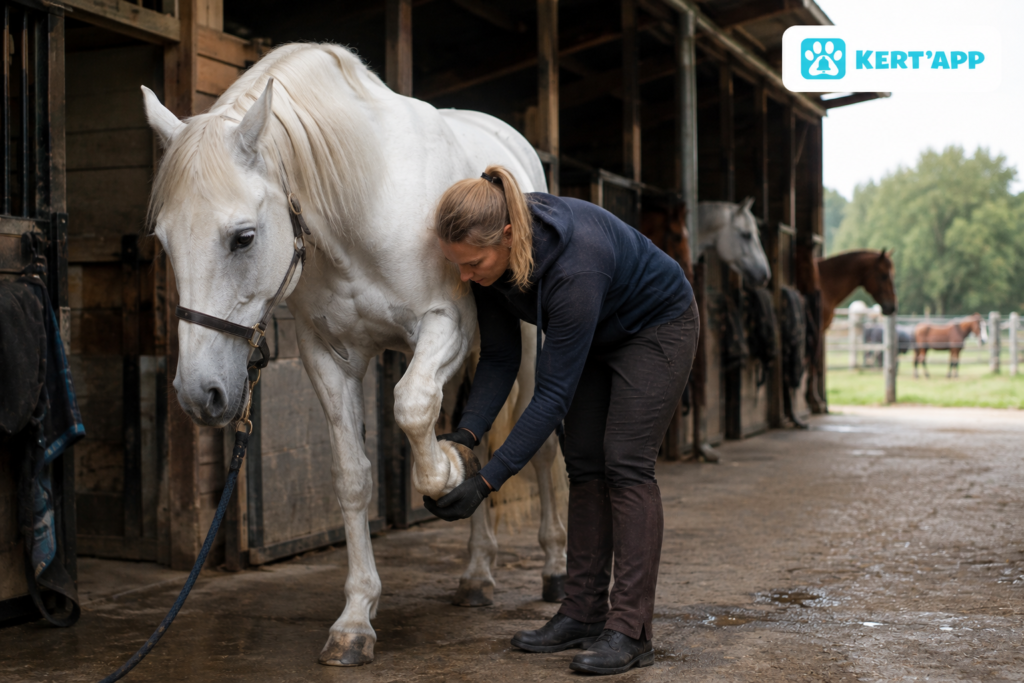
There’s an old saying in the horse world: “No hoof, no horse.” It sounds a little dramatic until you’ve watched an otherwise healthy, happy animal turn sore and reluctant because of something happening four inches below where anyone thinks to look. Hooves don’t announce trouble loudly. They just quietly stop working right, and by the time it’s obvious, you’re often playing catch-up.
The good news is that Horse hoof care isn’t complicated once you understand the basics. It just requires consistency , and a decent farrier on speed dial.
Why Horse Hoof Care Is the Foundation of Horse Health
A horse’s hoof isn’t a solid block of material. It’s a living structure made up of the hard outer wall, the sole, the frog (that V-shaped pad on the underside), and a network of internal tissues that absorb shock with every single step. A 1,000-pound animal puts an enormous amount of force through four relatively small contact points, so any imbalance in that structure ripples upward , into the joints, the tendons, even posture and gait.
That’s why hoof care isn’t a cosmetic chore. It’s preventative medicine. Left untrimmed, hooves grow unevenly, crack, or flare outward, which changes how weight is distributed and can lead to lameness over time. Regular care keeps that structure balanced before small issues become expensive, painful ones.
What Does a Farrier Actually Do?
A farrier is a specialist trained in trimming and shoeing horses’ hooves. It’s a hands-on trade that blends a bit of blacksmithing with a working knowledge of equine anatomy , enough to know exactly how much hoof wall can be safely removed and how a horse’s gait should look once the trim is done.
During a routine visit, a farrier will:
- Clean and inspect each hoof for cracks, thrush, or uneven wear
- Trim excess hoof wall and balance the foot
- Shape or replace shoes, if the horse is shod
- Check overall gait and posture as a quick health cross-check
Farrier vs. Veterinarian: Who Handles What
It’s easy to lump farriers and vets together since they both work on the same animal, often the same body part. But their roles don’t overlap much. A farrier handles the physical trimming, balancing, and shoeing. A veterinarian steps in for anything medical , diagnosing lameness, treating infections like abscesses, or managing conditions like laminitis. The best outcomes usually come from a farrier and vet who actually talk to each other, especially for horses with a history of hoof problems. Many equine and veterinary professionals coordinate this kind of care as a matter of routine, and having a shared system for tracking appointments and treatment notes makes that hand-off a lot smoother , something we’ve written about in the context of clinic software for small veterinary practices as well.
How Often Should a Horse’s Hooves Be Trimmed?
The standard baseline is every six to eight weeks, though it varies by horse. Hoof wall generally grows at a similar rate to human fingernails , a slow, steady process that adds up faster than people expect. A horse that’s shod, works on hard or abrasive terrain, or has a history of hoof issues might need more frequent visits. A barefoot horse living on soft pasture might stretch closer to the eight-week mark comfortably.
Signs Your Horse Is Overdue for a Trim
You don’t need to memorize a calendar if you know what to look for:
- Flaring or chipping at the edges of the hoof wall
- Uneven wear from one side of the hoof to the other
- A change in gait, stumbling, or reluctance to move forward
- Visible overgrowth, especially at the toe
If you’re noticing any of these between scheduled visits, it’s worth calling the farrier early rather than waiting it out.
Daily Hoof Care Every Owner Can Do
A farrier’s visit every six to eight weeks handles the structural side. Daily hoof care is what happens in between, and it’s arguably just as important.
How to Pick a Hoof Properly
Picking hooves daily , or at minimum before and after riding , clears out dirt, rocks, and manure that can pack into the sole and create the damp, bacteria-friendly environment where thrush thrives. Start at the heel and work toward the toe, following the natural grooves along either side of the frog. It only takes a minute or two per hoof once it becomes routine, and it doubles as an early-warning check: a foul smell, unusual softness, or heat in the hoof are all things you’ll only notice if you’re already down there looking.
Tools Worth Keeping in the Barn
A basic hoof care kit doesn’t need to be elaborate:
- A hoof pick, ideally one with a stiff brush on the other end
- A hoof rasp for light touch-ups between farrier visits (not a substitute for a professional trim)
- Hoof conditioner or dressing, if your farrier or vet recommends one for dry, cracking hooves
- A clean rag for wiping down after picking
To Shoe or Not to Shoe?
This is genuinely one of the more debated questions in horse care, and the honest answer is: it depends on the horse. Shoes protect the hoof wall from excess wear on hard or rocky terrain and can provide extra traction or support for horses with certain conformational issues. But shoes aren’t automatic. Plenty of horses do perfectly well barefoot, especially those on soft footing with a light workload.
The decision usually comes down to the horse’s job, the terrain it works on, and any existing hoof conditions , which is exactly the kind of judgment a farrier is trained to make, ideally in consultation with your vet if there’s a medical factor involved.
How Wild Horses Manage Without a Farrier
It’s a fair question: if wild horses don’t have farriers, how do their hooves stay in shape? The short answer is constant, varied movement. Wild horses cover long distances daily across mixed terrain , rock, sand, hard-packed ground , which wears the hoof down naturally at roughly the same rate it grows.
It’s a neat bit of natural engineering, but it’s not really a model domestic horses can follow. Most stabled or pastured horses simply don’t move anywhere near that distance or across that kind of varied surface, so their hooves need a human standing in for what the terrain would otherwise do.
Common Hoof Problems to Watch For
A few conditions come up often enough that every owner should recognize the basics:
- Thrush , a bacterial infection of the frog, usually caused by prolonged exposure to wet, dirty footing. It has a distinct foul smell and dark discharge.
- Laminitis , inflammation of the sensitive tissue connecting the hoof wall to the bone. It’s serious, sometimes emergency-level, and needs a vet involved immediately.
- Abscesses , pockets of infection inside the hoof, often causing sudden, severe lameness. Painful for the horse but generally treatable once located and drained.
- Cracks , ranging from minor and cosmetic to serious, depending on depth and location.
None of these are things to diagnose or treat solo. If something looks off, that’s a call to your vet or farrier, not a wait-and-see situation.
Building a Hoof Care Routine You’ll Actually Stick To
Most hoof problems aren’t caused by owners not knowing what to do , they’re caused by good intentions getting lost between a busy schedule and a farrier appointment booked eight weeks ago that quietly slipped everyone’s mind. A simple routine solves most of it:
- Pick hooves daily, or before/after each ride
- Book farrier visits on a recurring six-to-eight-week schedule, not “whenever it looks bad”
- Keep a record of trims, shoeing, and any hoof issues over time, so patterns are easier to spot
- Loop in the vet the moment something looks genuinely wrong, rather than waiting for the next scheduled visit
That third point trips up a lot of owners with multiple animals , remembering which horse was trimmed when, and by whom, gets messy fast once you’re juggling more than one pet. Apps like KertApp were built by breeders, for exactly that kind of day-to-day tracking , logging hoof care alongside vaccinations, treatments, and appointments so nothing quietly falls through the cracks between visits. You can read more about the people behind the app and why they built it around real barn routines rather than generic pet-tracking templates.
Key Takeaways
- Trim every six to eight weeks as a baseline, adjusted for terrain, workload, and whether the horse is shod
- Daily hoof picking prevents thrush and catches problems early, before they need a vet
- Farriers handle trimming and shoeing; vets handle diagnosis and disease , the two roles work best in coordination
- Shoeing is a case-by-case decision based on the individual horse, not a default setting
- Wild horses stay trim through constant varied movement, not a substitute domestic horses can rely on
Frequently Asked Questions
How often does a horse need a farrier?
Most horses need a farrier visit every six to eight weeks. Horses that are shod, work on hard terrain, or have a history of hoof issues may need more frequent trims.
Can I trim my own horse’s hooves?
Light touch-ups with a rasp between visits are reasonable if you know what you’re doing, but full trims and balancing are best left to a trained farrier. It’s easy to remove too much or throw off the horse’s balance without meaning to.
What does it mean if a horse is “barefoot”?
It simply means the horse isn’t wearing shoes. Many horses do fine without them, particularly those with light workloads on soft footing, but the decision should be made with your farrier based on the individual horse.
How do wild horses keep their hooves trimmed naturally?
Constant movement across varied, often abrasive terrain wears the hoof down at roughly the same pace it grows. Domestic horses typically don’t move enough or across similar surfaces to replicate this, which is why they need routine farrier care.
What are the signs of a hoof problem I shouldn’t ignore?
Watch for a foul smell, heat in the hoof, sudden lameness, visible cracks, or a change in gait. Any of these warrant a call to your farrier or vet rather than waiting for the next scheduled visit.
Conclusion
Hoof care isn’t glamorous, and it rarely feels urgent , right up until it is. The horses that stay soundest over the years usually aren’t the ones with the fanciest tack or the most expensive feed. They’re the ones whose owners quietly stuck to the basics: daily picking, a farrier on a real schedule instead of a “someday” list, and a fast call to the vet the moment something looked off.
None of that requires expertise you don’t already have. It just requires consistency, and a system that keeps you from relying on memory alone. Whether that’s a wall calendar, a notebook in the tack room, or an app that tracks it all alongside your other animals, the method matters less than actually using it. If you’re looking to get started or have questions about tracking hoof care alongside the rest of your pet’s health records, that’s exactly the kind of thing worth asking about.